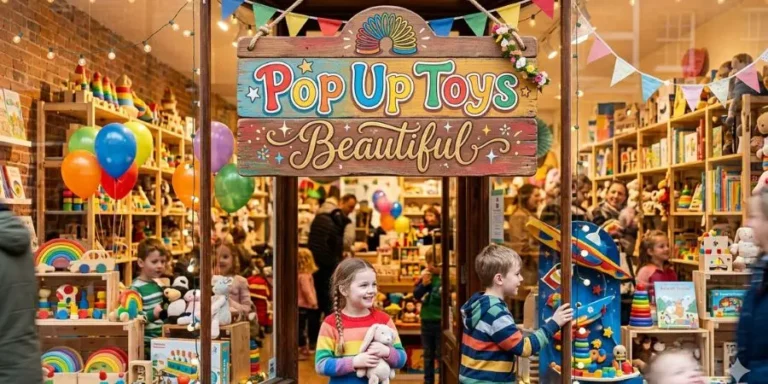

rainbow-tower
There is something almost magical about watching a child sit down with a pile of colorful blocks and lose themselves completely in the process of building. No instructions, no screen, no adult nudging them toward the right answer — just a kid, a stack of Rainbow Tower pieces, and a mind that has nowhere to go but up.
If you have ever witnessed this, you already know that something real is happening beneath all that laughter and concentration. What you might not have realized yet is just how much developmental work is quietly taking place.
Rainbow Tower is not simply a toy. It is one of those rare play tools that manages to speak directly to a child’s natural instincts while simultaneously giving their brain a serious and joyful workout.
This guide takes a close, honest look at how Rainbow Tower builds creativity in kids — from the earliest stages of toddler play all the way through school-age problem solving — and why parents, educators, and caregivers should pay attention to what happens every time those bright rings get stacked, scattered, and stacked again.
Also Read: How to Make Learning Fun with Magnetic Tiles Bahawalpur

Short Answer About: How does a Rainbow Tower help with child development
A Rainbow Tower helps with child development by combining fun and learning in one simple activity. As children stack the colorful rings or pieces, they improve their hand-eye coordination, fine motor skills, and finger strength. Picking up, holding, and placing each piece in the correct order helps develop control and precision in their movements.
The bright colors of a Rainbow Tower also support color recognition and visual learning. Children learn to identify different colors and understand basic concepts such as size, shape, and sequence. When they figure out how to arrange the pieces correctly, they practice problem-solving and critical thinking skills.
Playing with a Rainbow Tower can also improve concentration and patience. Children learn to focus on a task, follow patterns, and complete a simple challenge. This builds confidence and encourages independent play.
Also Read: How a Baby Piano Helps Babies Learn Through Music and Play
In addition, a Rainbow Tower promotes creativity. Kids often use the pieces in their own imaginative ways, creating different structures and games. Whether playing alone or with others, they develop important social and communication skills through sharing, taking turns, and working together.
Overall, a Rainbow Tower is more than just a toy. It supports physical, cognitive, and creative development while making learning enjoyable for young children.
What Makes Rainbow Tower Different from Ordinary Toys
Walk into any toy store and you will find shelves packed with options that promise to make children smarter, happier, or more creative. Most of those toys have a fixed outcome — a puzzle with one solution, a game with pre-set rules, a gadget that does most of the thinking for the child. Rainbow Tower is built on an entirely different philosophy.
At its core, Rainbow Tower is an open-ended stacking and sorting toy. It usually consists of a central cone or post and a series of colorful rings in graduated sizes. That simplicity is the point. There are no buttons to press, no sounds to trigger, and no correct order that must be followed. A child can stack the rings smallest to largest, largest to smallest, by color, by alternating pattern, or in any sequence that comes to mind in that moment. The Rainbow Tower does not judge. It simply responds to whatever the child decides to do next.
Also Read: Best Baby Record Book in Pakistan for New Parents
This open-endedness is what separates Rainbow Tower from toys that are merely entertaining. Entertainment is passive. Creativity is active. When a child picks up a ring and decides where it goes — not because the toy told them but because their own imagination made a choice — that is the beginning of creative thinking. And it starts much earlier than most parents expect.
How Rainbow Tower Sparks Imaginative Play in Toddlers
Children between the ages of one and three are in one of the most explosive periods of brain development in human life. During these years, the brain is forming neural connections at a staggering rate, and the quality of sensory and hands-on experiences during this time genuinely shapes how those connections are organized.
Rainbow Tower is perfectly designed for this stage. The rings are large enough to be handled safely by small hands, and the vivid colors immediately capture a toddler’s attention. But what happens after that first moment of visual interest is where things get genuinely interesting from a developmental standpoint.
Also Read: How to Make Fun Finger Puppets at Home
A toddler picking up a Rainbow Tower ring is not just holding a toy — they are making decisions. Which ring do I reach for? Where does it go? What happens when I put it here? What happens when I knock it over? These are not trivial questions for a developing brain. Each action and consequence creates a small loop of cause-and-effect learning that becomes the foundation for more complex creative and logical thinking later on.
The act of stacking itself involves spatial reasoning — understanding how objects relate to each other in three-dimensional space. Every time a toddler places a ring on the post, they are building what researchers call spatial intelligence, which is directly linked to creative and mathematical thinking throughout childhood and into adulthood.
And then there is color. The Rainbow Tower’s signature feature — its bright, graduated spectrum of colors — does more than look pretty. It gives toddlers their first vocabulary for describing the world around them. Red goes here. Blue goes next. The yellow one is different. Long before a child can read, Rainbow Tower gives them a language of shape, size, and color that they will carry into every future creative and academic endeavor.
Also Read: What Makes a Busy Board for Toddlers a Great Educational Toy
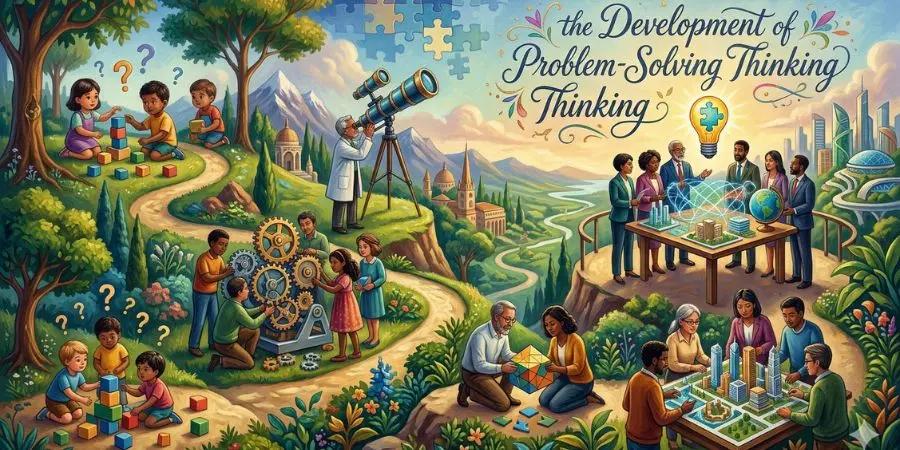
Rainbow Tower and the Development of Problem-Solving Thinking
Creativity and problem-solving are not separate skills. They are deeply intertwined, and Rainbow Tower nurtures both at the same time in a way that feels entirely natural to children.
Consider what a child encounters when they first approach a disassembled Rainbow Tower. There is a pile of rings and a post, and somehow those pieces are supposed to come together. No child gets it perfectly right the first time, and that is exactly the point. The mild frustration of figuring out why the big ring will not fit over the top forces the child to pause, observe, reconsider, and try again. That process — trying, failing, adjusting, and trying again — is the fundamental loop of creative problem-solving.
Also Read: What Are the Best Baby Toys for Different Ages in Islamabad
As children grow and their play with Rainbow Tower becomes more sophisticated, the problems they set for themselves also become more complex. A four-year-old might decide to build the tower backwards, with the largest ring at the top. A five-year-old might try to construct a symmetrical color pattern. A six-year-old might invent a game with rules they made up themselves, assigning point values to different rings or turning the stack into a storytelling prop where each ring represents a different character.
None of these games come from an instruction manual. They come from the same interior space where creativity lives — the place where a child asks themselves, “What if I tried it this way?” That question, repeated over and over through play, is how creative thinkers are formed.
How Rainbow Tower Builds Fine Motor Skills That Support Creative Expression
Creativity is not purely a mental activity. It requires the body, especially the hands, to translate inner ideas into outer reality. A child who draws, builds, sculpts, writes, or plays a musical instrument needs fine motor skills that are precise, controlled, and confident. Rainbow Tower plays a quiet but important role in developing exactly those skills.
Picking up and placing each ring on the Rainbow Tower post demands a level of hand-eye coordination that challenges young children in a productive way. The grip required to handle rings of different sizes exercises the same small muscles in the fingers, hands, and wrists that will later be used to hold a crayon, a paintbrush, a pair of scissors, or a pencil.
What makes this development especially powerful is that it happens without any sense of pressure or performance. A child stacking Rainbow Tower rings is not thinking about developing fine motor skills. They are thinking about the tower. The motor development is simply a natural byproduct of play that is genuinely enjoyable. This is precisely the kind of learning that sticks — the kind that happens when a child is absorbed and willing and self-directed rather than sitting at a table being drilled.
Over weeks and months of play with Rainbow Tower, children develop a physical confidence with their hands that quietly transfers to every other creative activity they encounter. When they sit down to paint for the first time, those hands already know how to grip. When they pick up a pair of safety scissors, those fingers already understand how to apply controlled pressure. Rainbow Tower has already done some of the groundwork.
Also Read: What Are the Best Ways to Wear Stacking Ring
Rainbow Tower as a Tool for Color Theory and Artistic Thinking
Long before a child ever steps into an art class, Rainbow Tower is giving them an intuitive education in color. The rings of a standard Rainbow Tower are arranged in a spectrum — red, orange, yellow, green, blue, indigo, violet — that corresponds directly to the colors of a rainbow and, not coincidentally, to the basic structure of color theory that artists and designers spend years studying.
When children play with those rings and begin to notice how colors relate to each other — that red and orange look warm together, that blue and green feel cool and calm, that putting red next to blue creates a vibrant contrast — they are developing what artists call color sensitivity. This is not something that needs to be taught through lectures or worksheets. It is absorbed through play, through the simple act of looking at colorful things and making choices about them.
Also Read: How to Use Baby Flash Cards for 0-6 Months
Parents who pay attention will notice that children who have spent significant time with Rainbow Tower often develop strong, confident color preferences and an intuitive sense of how to combine colors in drawings and paintings. They are not afraid of color. They are comfortable with it because they have been handling it, arranging it, and experimenting with it since they were very small.
This comfort with color becomes a genuine asset in creative work of all kinds — visual art, obviously, but also in the way children describe the world in words, the way they choose materials for crafts and projects, and the way they develop their own aesthetic sensibility over time.
How Rainbow Tower Encourages Social and Collaborative Creativity
Creativity is often pictured as a solitary activity — a lone artist or inventor working quietly in a corner. But some of the most important creative work happens between people, and the habits of collaborative thinking are formed early, often through play.

Rainbow Tower is a natural facilitator of shared creative play. When two or three children sit down with a set of Rainbow Tower rings, they almost inevitably begin to negotiate, take turns, share ideas, and build on each other’s contributions. One child suggests a color pattern. Another disagrees and proposes something different. They find a compromise, or they decide to build two towers, or they invent a game where both of their ideas become part of the rules.
This kind of collaborative play is where some of the most sophisticated creative thinking happens in early childhood. Children are not just making things — they are communicating about what they want to make, listening to other perspectives, and learning how to blend different ideas into something that neither of them could have arrived at alone. These are exactly the skills that fuel creative collaboration in every field from the arts to the sciences to business.
Also Read: Baby Books Pakistan for Brain Development & Creativity
Adults can support this by stepping back and resisting the urge to organize or direct. The most productive creative play with Rainbow Tower tends to happen when children are given the space to figure things out between themselves. Disagreements are not problems to be solved by an adult — they are opportunities for children to practice the social side of creativity, which turns out to be just as important as the individual side.
Rainbow Tower in the Classroom: What Educators Are Discovering
Teachers and early childhood educators who have introduced Rainbow Tower into their classroom environments consistently report something that aligns with what parents observe at home: children who spend time with open-ended manipulatives like Rainbow Tower demonstrate more flexible thinking, better ability to generate multiple solutions to a problem, and greater comfort with ambiguity than children whose play is dominated by toys and games with fixed outcomes.
This matters because flexibility, generative thinking, and comfort with ambiguity are not just traits of creative people — they are core competencies for learning itself. A child who has learned through play that there is almost always more than one way to stack the rings, more than one answer to the question of what looks right, is a child who brings that same openness to reading comprehension, math problem-solving, and science exploration.
In Montessori and Reggio Emilia-inspired classrooms, open-ended materials like Rainbow Tower have been staples for decades precisely because they honor the child’s capacity to construct knowledge through self-directed exploration. When a child decides for themselves what to do with the Rainbow Tower, they are exercising the same executive function and autonomous thinking that educators are working to cultivate across every subject area.
What is particularly encouraging is that Rainbow Tower works across a wide developmental range. A two-year-old and a six-year-old can both be meaningfully engaged with the same set of rings, just at entirely different levels of complexity. That adaptability makes it one of the most enduring and genuinely useful tools in any early childhood environment.
Everyday Ways to Deepen Creative Play with Rainbow Tower at Home
Understanding why Rainbow Tower builds creativity is one thing. Knowing how to actually support and extend that creativity at home is another. The good news is that it does not require elaborate setups or significant time investment. It mostly requires a willingness to follow the child’s lead.
Give Rainbow Tower a permanent, accessible spot where children can reach it independently. Creativity is spontaneous, and having to ask an adult to get the toy down from a shelf every time adds a barrier that dampens that spontaneous impulse. When Rainbow Tower lives somewhere a child can reach it on their own, they will return to it naturally and more often.
Resist the temptation to demonstrate the “right” way. When adults show children how to stack the rings in the traditional largest-to-smallest order, they inadvertently send a message that there is a correct answer, which is exactly the wrong message for creative development. Let the child discover sequences themselves. Their own discoveries will be far more meaningful than anything an adult shows them.
Ask open questions rather than giving directions. “What are you building?” invites a story. “What would happen if you put the tiny one on the bottom?” invites an experiment. “Which color comes next?” reduces Rainbow Tower to a quiz. The difference between those three approaches is the difference between supporting creative thinking and undermining it.
Combine Rainbow Tower with other materials occasionally — scarves, blocks, small figures, watercolor paints, playdough. Loose parts play, which is what early childhood educators call the mixing of various open-ended materials, dramatically expands the creative possibilities and often leads children to surprising, imaginative combinations that neither they nor their parents could have predicted.
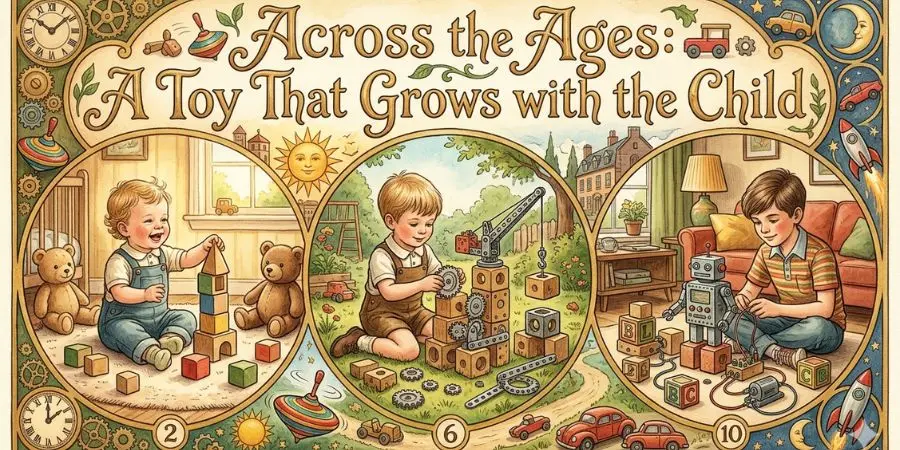
Rainbow Tower Across the Ages: A Toy That Grows with the Child
One of Rainbow Tower’s most underappreciated qualities is its longevity. Most parents assume that stacking toys are strictly for toddlers and move on once their child has mastered the basic sequence. But children who are given continued access to Rainbow Tower consistently find new ways to use it as their cognitive and imaginative capacities grow.
A two-year-old stacks and topples. A three-year-old begins to sort by color and notice patterns. A four-year-old creates games with invented rules. A five or six-year-old might use the rings as props in an elaborate story, assigning characters and plotlines to each color. An older child might use Rainbow Tower as a sorting or counting manipulative, or as the foundation for building concepts in early mathematics like greater than, less than, and ordinal sequencing.
At each stage, the child is bringing new cognitive tools to the same physical object and finding that it is still rich enough to be worth their attention. This is the hallmark of truly excellent open-ended toys — they expand to fill the developmental capacity of the child who is playing with them, rather than becoming obsolete the moment a particular skill is mastered.
Final Thoughts
Creativity is not a talent that some children are born with and others are not. It is a capacity that all children possess and that either gets nurtured and exercised or quietly neglected depending on the environment and experiences available to them. Rainbow Tower is one of the most effective and most accessible tools available to parents and educators who want to nurture that capacity deliberately.
It builds spatial reasoning through the physical act of stacking. It develops color sensitivity through daily visual play. It strengthens fine motor skills through the grip and placement of each ring. It teaches problem-solving through the natural cycle of trial and adjustment. It encourages collaborative thinking through shared play. It supports autonomy and self-direction by giving children a material that responds to their choices rather than dictating them.
None of this happens through instruction or structured lessons. It happens through play — through the simple, joyful, deeply serious business of a child sitting with a pile of colorful rings and deciding, moment by moment, what to do next. Rainbow Tower makes that business possible in the best possible way.
If you are looking for one toy that will earn its place in your home or classroom for years, that will grow with your child and continue to offer something real and valuable at every developmental stage, Rainbow Tower is that toy. Give it room, give it time, and then step back and watch what a child can build when the imagination is trusted to lead the way.
FAQs
What age is Rainbow Tower suitable for?
Rainbow Tower is ideal for children aged 1 and up. Toddlers enjoy basic stacking, while older kids invent games and patterns, making it a toy that genuinely grows with the child.
How does Rainbow Tower help with creativity?
It offers open-ended play with no fixed rules, so children make their own choices about color, order, and design — naturally building imaginative and creative thinking with every session.
Can Rainbow Tower be used in classrooms?
Yes. Teachers use it as a hands-on manipulative to build color recognition, sorting skills, and flexible thinking. It fits beautifully into Montessori and play-based learning environments.
Is Rainbow Tower just for solo play?
Not at all. Kids playing together with Rainbow Tower naturally negotiate, share ideas, and collaborate — building social creativity alongside individual imagination in a fun, pressure-free way.
How long will a child stay interested in Rainbow Tower?
Longer than most toys. Because it has no fixed outcome, children find new ways to use it as they grow — from simple stacking at age one to storytelling and pattern games by age six.

“Hi, I’m Turab Sheikh, the founder of Kids Play Learn. With 2+ years of experience in creating safe and educational toys, I’m passionate about helping children learn, play, and grow in a fun way every day, and I focus on providing toys that inspire creativity, curiosity, and joyful learning.”