fun-finger-puppets
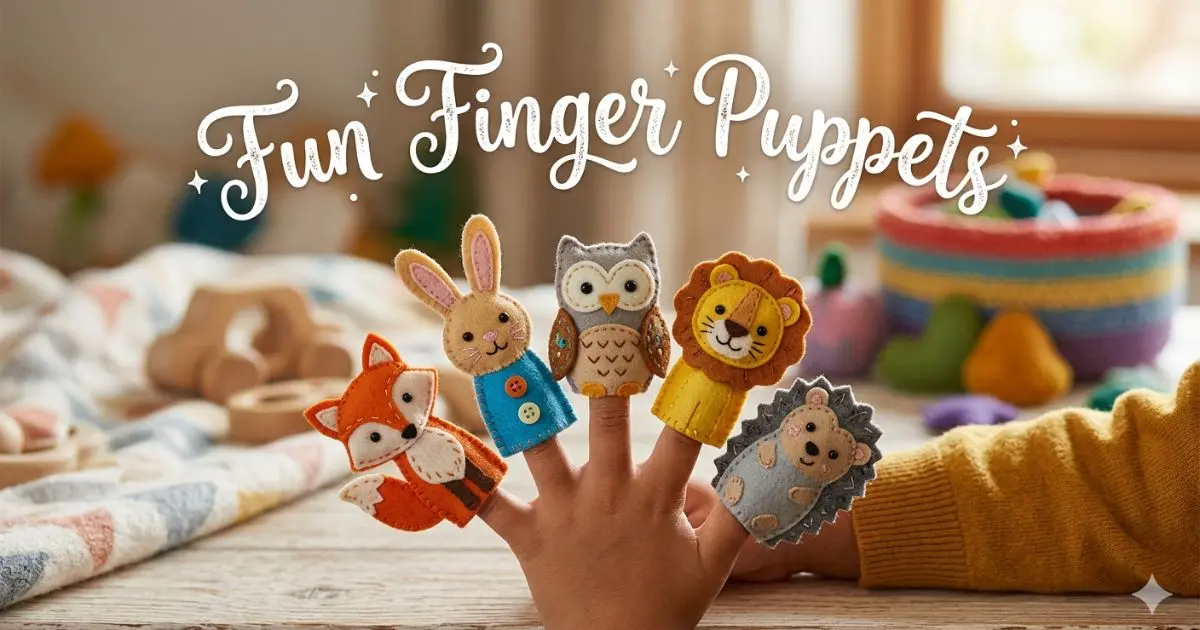
Fun Finger Puppets are small, soft toys that fit on children’s fingers and make playtime more fun and creative. They help kids enjoy storytelling, improve imagination, and build communication skills through interactive play. Colorful and easy to use, finger puppets are perfect for learning, entertainment, and family bonding time.
Also Read: What Are the Best Baby Toys for Different Ages in Islamabad
Small Crafts, Big Smiles
There is something quietly magical about slipping a tiny character onto your fingertip and watching a child’s eyes light up. Finger puppets are one of those rare crafts that manage to be simple enough for beginners yet endlessly creative for experienced makers. They cost almost nothing, take very little time, and the joy they produce is completely disproportionate to the effort involved.
Fun Finger Puppets, Whether you are a parent looking for a rainy-afternoon activity, a teacher planning a storytelling lesson, or just someone who loves making things with their hands, finger puppets are one of the most satisfying little projects you can attempt at home. They work across ages — toddlers love the bright colors and soft textures, older children enjoy designing their own characters, and adults find the process surprisingly meditative.
Also Read: What Are the Benefits of Magnetic Blocks for Kids Sahiwal
In this guide, we will walk through everything you need to know: the materials, the methods, the styles, and the creative possibilities. By the end, you will have enough knowledge to make an entire cast of characters from whatever scraps and supplies you already have lying around the house.
Why Finger Puppets Are Worth Making
Fun Finger Puppets, Before we get into the how, it is worth spending a moment on the why. Store-bought toys are fine, but handmade ones carry a different kind of weight. When a child plays with something their parent or grandparent made specifically for them, that object becomes something more than a toy. It becomes a memory.
Beyond the sentimental value, making finger puppets at home has a number of very practical benefits:
They are cheap. Most of the materials you need — felt, fabric scraps, yarn, old gloves, googly eyes — are things many households already have. Even if you have to buy supplies, a basic set of craft felt sheets costs only a few dollars and can yield dozens of puppets.
They develop skills. For children who join in the making, finger puppet crafts build fine motor skills, encourage creativity, and teach basic concepts like cutting, measuring, and following steps. For younger kids who just watch, the finished puppets become incredible tools for imaginative play and storytelling.
Also Read: How to Create a Busy Board for Kids at Home Sheikhupura
They are fast. Unlike many craft projects that sprawl across an entire weekend, a basic finger puppet can be completed in fifteen to twenty minutes. That makes them perfect for spontaneous crafting sessions.
They are endlessly customizable. Want a dragon? A bunny? A pirate? A friendly monster with three eyes? All of it is possible with the same basic technique and a little imagination.
What You Will Need: The Basic Materials
One of the best things about making finger puppets is that you do not need a long shopping list. Here is what to gather before you begin:
Essential Supplies
Felt fabric — This is the material of choice for most beginner puppet makers, and for good reason. Felt does not fray when you cut it, it comes in a wide range of colors, it is soft and flexible, and it is cheap. A multi-color pack of felt sheets is ideal.
Scissors — A good pair of craft scissors makes a real difference. If children are participating, keep a pair of child-safe scissors handy for them.
Fabric glue or a hot glue gun — Either works well. Fabric glue is safer for children and gives a neat result, though it takes longer to dry. A hot glue gun is faster and very strong, but should only be used by adults.
Also Read: What Are the Best Toys for 3 Year Old Boys Sialkot
Needle and thread — If you prefer to sew your puppets rather than glue them, basic thread in a variety of colors is all you need. Sewing creates a more durable puppet, but gluing works perfectly well for most purposes.
Googly eyes — These instantly bring any puppet to life and are available at any craft store for very little money.
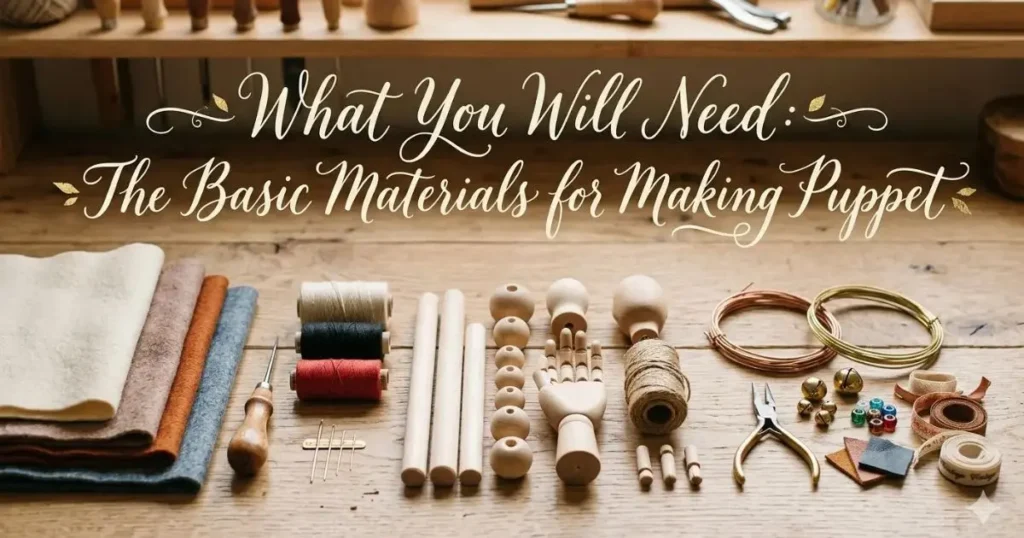
Markers or fabric paint — For adding details, expressions, and personality to your characters.
Optional but Useful
- Yarn (for hair and manes)
- Buttons (for noses or decorative details)
- Pipe cleaners (for tails, antennae, or arms)
- Foam sheets (for stiffer elements like crowns or hats)
- Ribbon and lace (for clothing details)
- Pom-poms (for tails, noses, or texture)
- Old gloves (for a different approach — more on that shortly)
Getting the Size Right
Before cutting anything, you need a basic template. The finger puppet needs to fit comfortably over an adult or child’s finger — snug enough not to fall off, but loose enough to slide on and off easily.
A good starting size for an adult finger is approximately 2.5 centimeters wide and 4 to 5 centimeters tall for the main body piece. For a child’s finger, reduce the width to about 2 centimeters.
How to make a simple template:
- Place your finger on a piece of paper.
- Trace loosely around it, leaving a few millimeters of extra space on each side.
- Draw a simple rounded top — this becomes the head of your puppet.
- Cut out the shape. This is your master template.
Once you have the template, trace it twice onto felt and cut out both pieces. These two pieces will form the front and back of your puppet.
Method One: The Classic Felt Finger Puppet
This is the simplest and most popular approach. It works for virtually any character you can imagine.
Step One: Cut Your Base Pieces
Using your template, cut two identical shapes from felt. These will be the front and back of the puppet body. Choose a color that suits your character — green for a frog, grey for an elephant, orange for a fox, and so on.
Also Read: What Are the Best Toys for a 2-Year-Old Boy Multan
Step Two: Decorate the Front Piece
Before you join the two pieces together, decorate the front. This is much easier than trying to add details after assembly.
Glue on a pair of googly eyes. Cut tiny shapes from felt for ears, a beak, a snout, or a muzzle. Draw on a mouth, eyebrows, or freckles with a marker. Add yarn for hair. If your character needs stripes, polka dots, or patches, cut those from felt and glue them on now.
Take your time with this step. The front piece is where all the personality lives, and small details make a big difference.
Step Three: Join the Front and Back
Once the front piece is fully decorated and the glue is dry, it is time to join the two pieces.
If you are gluing: Apply a thin line of fabric glue or hot glue around the curved edges of one piece — the sides and top, but NOT the bottom. Press the two pieces together firmly and hold for a moment. Leave to dry completely. The open bottom is where your finger goes in.
Also Read: What Are the Benefits of Cloth Books for Babies Pakpattan
If you are sewing: Thread your needle with matching or contrasting thread. Use a simple running stitch or blanket stitch around the curved edges, again leaving the bottom open. A blanket stitch gives a very tidy, decorative finish and is well worth learning if you plan to make many puppets.
Step Four: Add Final Touches
Once assembled, you can add any final three-dimensional details. Pipe cleaner antennae can be glued between the front and back pieces. A tiny pom-pom tail can be attached to the back. A miniature felt hat can be glued to the top. These extra touches are what transform a simple puppet into a real character.
Method Two: The Old Glove Finger Puppet
This method is brilliant for making a whole set of puppets quickly — particularly if you want a matching cast of characters for a story.
Find an old knitted or stretchy glove — one you no longer use. Each finger of the glove becomes one puppet. Because the glove is already fitted to finger size, there is no measuring or cutting of base pieces required.
Simply cut each finger off the glove, leaving a little extra length at the base so it does not unravel. Then decorate each fingertip just as you would a felt puppet — adding googly eyes, felt features, yarn hair, and marker details.
Also Read: How to Choose the Best Toys for Your 1-Year-Old in Lahore
The texture of knitted fabric gives these puppets a slightly different look and feel compared to felt ones — softer, stretchier, and often very charming. They are especially good for animal characters whose fur texture can be suggested by the knit of the fabric.
Method Three: Paper Finger Puppets for Quick Play
Not everyone has felt or craft supplies on hand. If you have paper, markers, scissors, and tape, you can make finger puppets right now.
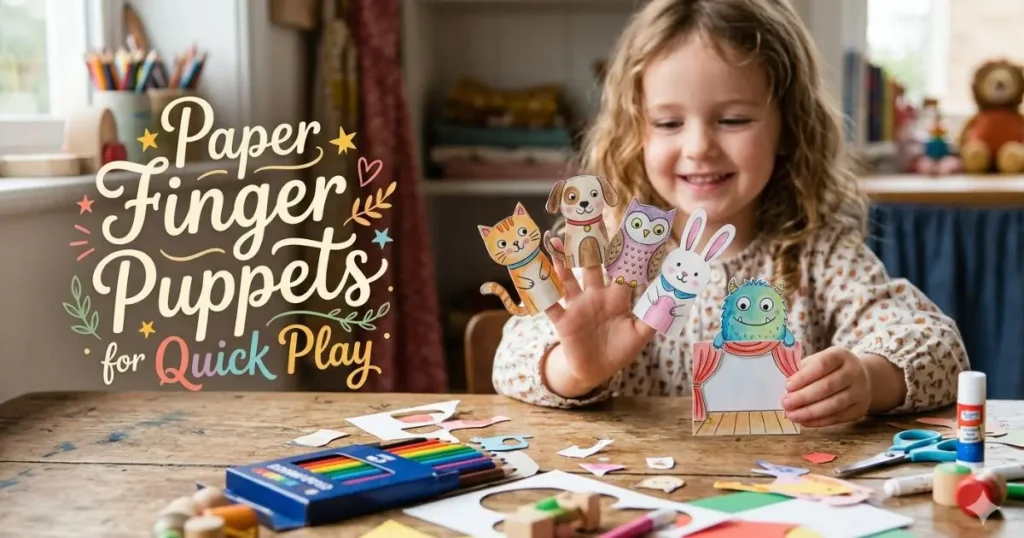
Draw a character directly onto a piece of thick paper or card stock — something around 6 to 7 centimeters tall works well. Color it in with markers or crayons. Cut it out carefully, leaving a rectangular tab at the bottom.
Roll the tab into a cylinder that fits your finger and secure it with tape. That is your finger puppet. Paper puppets are fragile and not meant to last, but they are perfect for immediate play, for testing out character ideas, or for a quick activity with children when proper craft supplies are not available.
You can also print character outlines from the internet and let children color and cut them out themselves, making the whole process part of the creative experience.
Character Ideas to Get You Started
The hardest part of making finger puppets is often not the craft itself — it is deciding what to make. Here are some character ideas organized by theme to help spark your imagination:
Classic Animals
Rabbit, cat, dog, frog, elephant, owl, fox, bear, lion, monkey, butterfly, bee, ladybug, fish, turtle
Fairy Tale Characters
A princess, a knight, a dragon, a witch, a wizard, a giant, a fairy, a mermaid, a wolf, three pigs, Little Red Riding Hood
Nursery Rhyme Cast
Humpty Dumpty, the cow who jumped over the moon, the dish and the spoon, Jack and Jill, Miss Muffet, the spider
Imaginative and Original
Friendly aliens, tiny robots, woodland fairies, talking vegetables, mini superheroes, cloud creatures, little monsters who are actually very kind
Seasonal and Holiday Characters
A snowman, a jack-o’-lantern, a turkey, a heart for Valentine’s Day, a shamrock fairy, an Easter chick, a firework sprite
Tips for Making Better Puppets
Over time, anyone who makes finger puppets regularly develops a few personal tricks. Here are some that tend to make the biggest difference:
Work with small pieces. Everything in finger puppet making is tiny. Cut small pieces precisely rather than cutting large pieces and trying to trim them down. A sharp pair of scissors and patience go a long way.
Let glue dry fully before moving on. One of the most common mistakes is rushing assembly before glue has set properly. Give each gluing step at least a few minutes — more for fabric glue. Rushing leads to pieces coming loose and feeling frustrated.
Use the right amount of glue. More is not better with glue on small crafts. Too much glue seeps out from edges and looks untidy. Use a toothpick to apply small amounts of fabric glue precisely where you need it.
Felt can be layered. You can cut shapes from one color of felt and layer them on top of another to create depth and detail — a white felt muzzle on a brown bear, for instance, or a yellow beak on a red cardinal.
Eyes make the character. Whatever else you do, spend extra time on the eyes. The placement, size, and expression of the eyes determine the entire personality of the puppet. Two googly eyes placed far apart give a surprised, wide-eyed look. Closer together and slightly lower feels more intense. Experiment before you glue.
Involve children in the process. Even very young children can help with simple steps — choosing colors, pressing pieces together, decorating with stickers, or drawing mouths with a marker. The more ownership they feel over the puppet, the more they will play with it.
Turning Puppets Into Play
Making the puppets is only half the joy. What you do with them afterward is where the real magic happens.
Put on a puppet show. Set up a simple puppet theater by draping a blanket over a table or box and crouching behind it. Even the simplest setup becomes a stage with a little imagination.
Use them for storytelling. Finger puppets are wonderful tools for retelling familiar stories or inventing new ones. A set of three bear puppets and a little girl puppet is all you need for Goldilocks. A frog and a princess can play out their own version of events.
Help with tricky conversations. Puppets have a remarkable ability to make difficult topics easier for children to approach. Talking through worries or fears through a puppet character can feel less overwhelming than a direct conversation.
Make a matching book. If you are feeling ambitious, you can make a small handmade book to go alongside the puppet set — simple illustrated pages telling the story of the characters your child helped create.
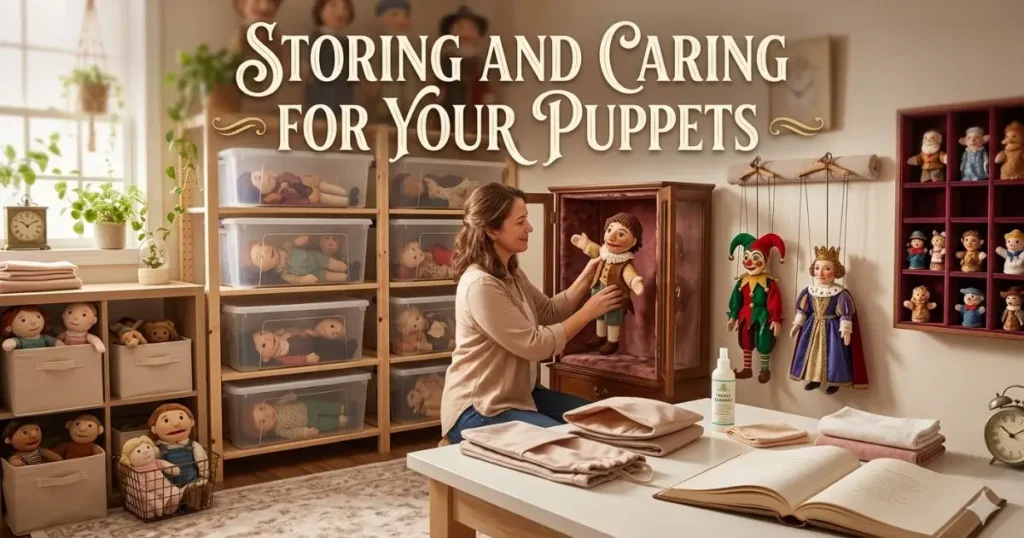
Storing and Caring for Your Puppets
Felt finger puppets are reasonably durable, but they do need a little care to last.
Store them in a small fabric bag, a box, or even a repurposed egg carton — one puppet per compartment is a lovely way to organize a collection. Keep them away from water, as felt can lose its shape when wet and take a long time to dry.
If a seam comes loose, a small dot of fabric glue is usually enough to fix it. Puppets that are sewn tend to last longer than glued ones, but both can give years of play if handled with care.
A Note on Making Them as Gifts
Handmade finger puppets make genuinely wonderful gifts, especially for young children. A small set of five or six puppets made from felt, tucked into a little drawstring bag or a decorated box, is something that stands apart from any store-bought toy.
Consider making a set themed around a child’s particular interest — if they love dinosaurs, make a triceratops, a T-rex, a stegosaurus, a pterodactyl, and a brachiosaurus. If they love the ocean, make a whale, a crab, an octopus, a seahorse, and a dolphin. That kind of thoughtful personalization makes a gift feel truly special.
Final Thoughts
Fun Finger Puppets are one of those crafts that seem simple on the surface but open up into something genuinely rich the more time you spend with them. They connect making with storytelling, and storytelling with play, and play with learning — and all of that happens in the span of a single cozy afternoon.
There is no wrong way to make a finger puppet. A lopsided bear with one googly eye slightly higher than the other is not a mistake — it is a character. The imperfections of handmade things are part of what gives them their charm and their warmth. Children, in particular, love objects that feel human in their making.
So gather your felt scraps and your scissors, clear a corner of the kitchen table, and start making. Make a rabbit first because rabbits are easy. Then make a fox because foxes are interesting. Then let a child sitting beside you decide what comes next — and follow wherever their imagination leads.
That is really what finger puppets are about. Not the craft supply list, not the technique, not the finished product sitting neatly in a row. It is the making together, the inventing of little lives, and the stories that begin to tell themselves the moment you slide a tiny character onto your fingertip and hold it up to the light.
FAQs
What is the best material for making finger puppets at home?
Felt is the top choice. It does not fray, comes in many colors, and is easy to cut and glue. Even young children can handle it comfortably without any sewing experience needed.
How long does it take to make a single finger puppet?
Most basic puppets take around 15 to 20 minutes. If you add extra details like yarn hair or tiny hats, allow 30 minutes. Once you get the hang of it, you move much faster.
Can young children make finger puppets on their own?
Most basic puppets take around 15 to 20 minutes. If you add extra details like yarn hair or tiny hats, allow 30 minutes. Once you get the hang of it, you move much faster.
How do I store finger puppets so they last longer?
Keep them in a small fabric pouch or a box away from water. Felt loses shape when wet and dries slowly. A simple drawstring bag keeps the whole set together and makes them easy to find.
Do I need to sew finger puppets or can I just use glue?
Glue works perfectly fine. Fabric glue or a hot glue gun both give solid results. Sewing makes puppets last longer, but for everyday play, glue holds up well enough for most families.

“Hi, I’m Turab Sheikh, the founder of Kids Play Learn. With 2+ years of experience in creating safe and educational toys, I’m passionate about helping children learn, play, and grow in a fun way every day, and I focus on providing toys that inspire creativity, curiosity, and joyful learning.”