best-ways-to-wear-stacking-ring
Best Ways to Wear Stacking Ring, There is something quietly addictive about stacking rings. You buy one, wear it for a week, and then your fingers feel oddly bare without a second, a third, maybe a fourth sitting beside it. Before you know it, you are standing in a jewelry store holding three bands up to the light trying to figure out which one completes the little world you have built on your hand.
If you have ever felt that pull, you are not alone. Stacking rings have gone from a niche styling trick to one of the most beloved forms of personal expression in everyday fashion — and for good reason. They let you tell a story about yourself without saying a single word.
Also Read: What Are the Best Baby Toys for Different Ages in Islamabad
But here is the thing nobody tells you: wearing stacking rings well is not just about piling on as many bands as your fingers can hold. There is an art to it. There is instinct involved, a bit of color theory, some knowledge about metals and proportions, and a real understanding of your own personal taste. This guide is going to walk you through everything — from the basics of how to start building your stack to the more nuanced decisions around mixing metals, playing with textures, and knowing when to stop.
Start With One Ring That Means Something
Best Ways to Wear Stacking Ring, Before you think about layering, you need an anchor. Every great stack has one ring that does the heavy lifting — something with a little personality, a little weight, or a little history. It might be a signet ring with an engraved initial. It could be a simple gold band with a hammered texture that catches the light differently depending on the hour. Maybe it is a ring someone gave you, or one you bought yourself to mark a chapter of your life you wanted to remember.
Also Read: What Are the Benefits of Magnetic Blocks for Kids Sahiwal
The anchor ring sets the tone for everything that comes after it. If it is bold and chunky, your stack will lean that direction. If it is delicate and refined, you will want companions that match that energy. Do not skip this step by jumping straight to buying a whole set of matching rings from the same brand. Those sets can work, but they rarely feel as alive as a stack you have built piece by piece, ring by ring, over months or years.
Once you have your anchor, everything else becomes a conversation with it.
Learn the Anatomy of a Good Stack
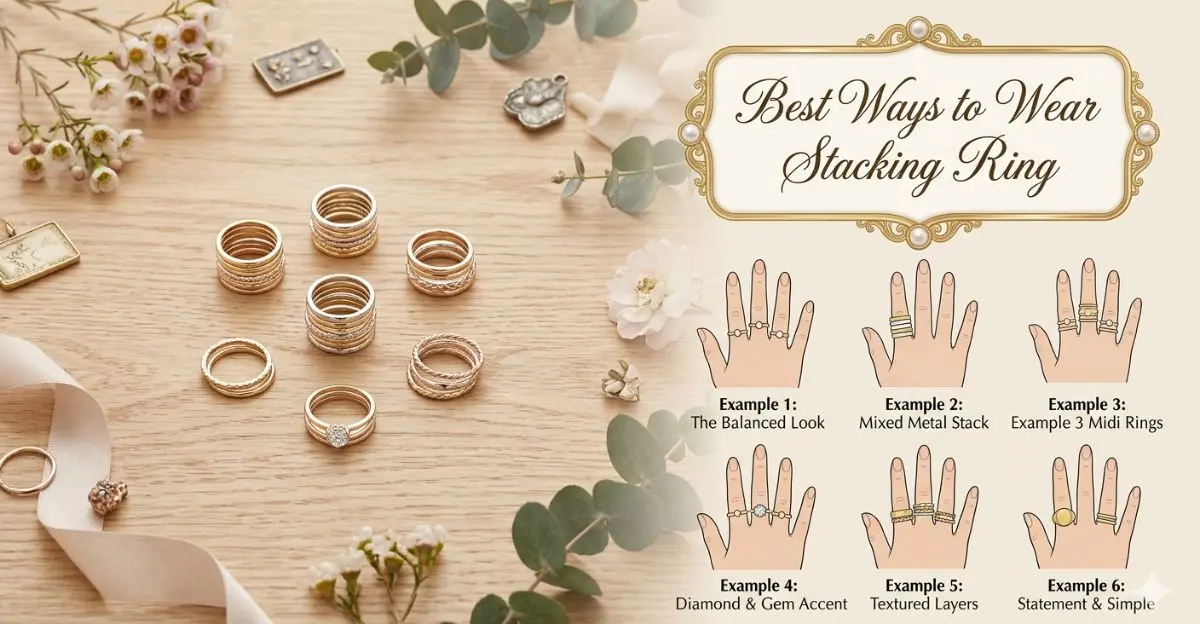
Most jewelry stylists and editors will tell you the same thing when you ask about building a stack: think in threes, at least at the beginning. A group of three rings on one finger gives you enough visual interest without tipping into chaos. Here is a simple framework that works surprisingly well:
One statement piece
This is your anchor — the ring with presence. It might be slightly wider, slightly more textured, or slightly more ornate than the others.
One connector.
This is usually a simple, thin band. Its job is to give the eye a place to rest between more interesting pieces. A plain polished gold band, a slim silver wire ring, or a thin eternity band with small stones all work beautifully in this role.
One accent.
This is where you get to have a little fun. A ring with a small gemstone, an interesting shape, or a contrasting finish can serve as the accent without overwhelming the overall look.
Best Ways to Wear Stacking Ring, Once you understand this three-part structure, you can start experimenting. Maybe you use two connectors instead of one. Maybe your accent piece is actually the boldest thing on your hand and your statement ring plays a more restrained role. The point is that the framework gives you a starting point, not a rulebook.
Also Read: How to Create a Busy Board for Kids at Home Sheikhupura
Mixing Metals: Breaking the Old Rules
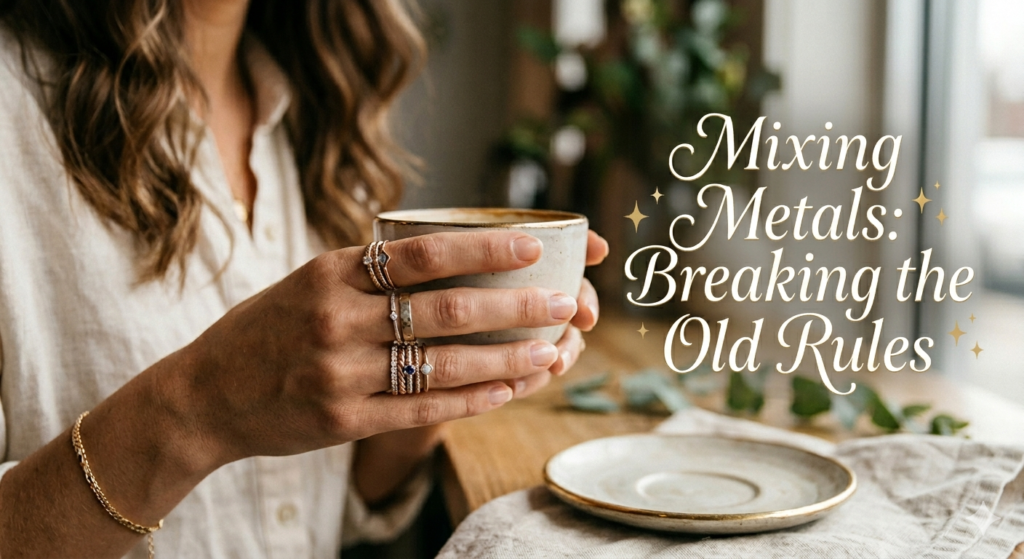
For decades, the conventional wisdom said you should not mix gold and silver. Wear one or the other, never together. That thinking is now outdated, and honestly, some of the most interesting stacks being worn today embrace the combination of yellow gold, rose gold, white gold, and silver all on the same hand.
The key to mixing metals successfully is intentionality. Do not mix them randomly — mix them with purpose. Here is what that looks like in practice:
Let one metal dominate.
If you are wearing mostly yellow gold bands, a single silver or white gold ring dropped in among them reads as a deliberate accent rather than a mistake. Flip that ratio and you have a different mood entirely. One or two yellow gold pieces among a mostly silver stack add warmth without disrupting the cool undertone of the look.
Also Read: What Are the Best Toys for 3 Year Old Boys Sialkot
Use texture to bridge the gap
Mixing metals feels more cohesive when the rings share something — a similar finish, a similar scale, or a similar design sensibility. A hammered gold band and a hammered silver band look intentional together. A polished gold band next to a matte silver ring of similar thickness also works because the weight and scale rhyme even if the color does not.
Rose gold is your secret weapon
Rose gold sits beautifully between yellow gold and silver in terms of warmth, which makes it an excellent bridge piece when you are mixing the other two. Slip a rose gold band between a yellow gold statement ring and a silver accent ring, and suddenly the whole stack feels like it belongs together.
Which Fingers Do You Stack On
This question comes up constantly, and the answer is more personal than prescriptive. There is no rule that says stacking must happen on a specific finger. That said, different fingers have different connotations, different widths, and different relationships with the rings you wear daily.
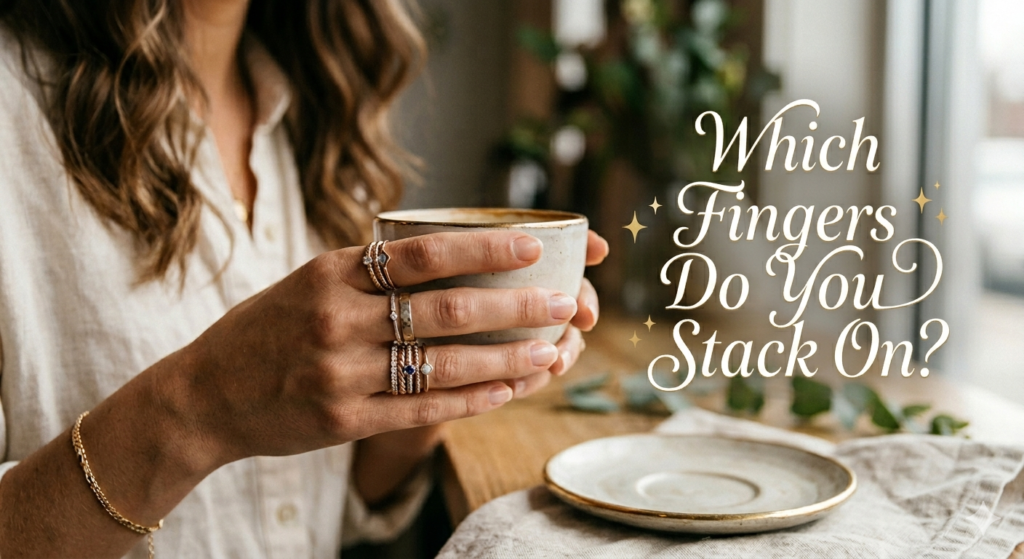
The ring finger is the most common stacking finger, largely because it is already home to engagement rings and wedding bands for many people. Stacking on the ring finger is a natural extension of that tradition. You might stack a thin eternity band on either side of a solitaire engagement ring, or build a full stack on a bare ring finger that tells its own story.
Also Read: What Are the Best Toys for a 2-Year-Old Boy Multan
The index finger is bold. Rings on the index finger are immediately noticeable because this finger is so active in gesture and movement. A single statement ring here can be enough. A small stack of two or three delicate bands can work beautifully if the rings are slim and refined.
The middle finger is the safest canvas. It is the longest finger on most hands, which gives you the most room to work with. A more elaborate stack — four or five rings — often looks most balanced on the middle finger because there is more length to spread across.
The pinky finger is for the maximalists and the playful dressers. Stacking on the pinky feels like a deliberate statement — you know what you are doing, and you are doing it with a little bit of swagger. Keep the rings slim and delicate on this finger because there is simply less real estate to work with.
Stacking across multiple fingers is where things get truly interesting. Wearing one or two rings on three different fingers, with different configurations on each, creates a whole composition across your hand. The trick is to let each finger’s stack be its own thing while ensuring there is enough visual harmony across the hand as a whole — similar metals, similar scale, or a shared design element — to prevent the look from feeling scattered.
Proportions and Scale: The Detail Most People Miss
One of the most common mistakes in stacking is ignoring proportions. A very chunky, wide band sitting next to an extremely thin wire ring can look awkward not because they do not match aesthetically, but because the difference in scale is too extreme. They are not speaking the same language.
This does not mean all your rings need to be the same width. Variation in scale is actually part of what makes a stack interesting. But the variation should feel graduated rather than jarring. Moving from a 4mm band to a 2mm band to a 1mm band creates a pleasant visual rhythm. Moving from a 6mm band directly to a 1mm wire ring with nothing in between can feel like two separate stacks accidentally placed next to each other.
Think about scale as a conversation. Each ring should acknowledge the ones beside it, either by echoing something about them or by creating a deliberate and graceful contrast. When you pick up a new ring and hold it next to your existing stack, notice whether it feels like it is joining the conversation or starting an entirely new one.
Also Read: What Are the Benefits of Cloth Books for Babies Pakpattan
Gemstones in a Stack: Handling Color With Confidence
Adding rings with colored gemstones into a metal stack opens up a whole new dimension of possibility — and a whole new set of decisions. The color, size, and cut of a stone all affect how it sits within the larger composition.
Diamonds and white sapphires are the easiest gemstones to stack with because they read as neutral sparkle. A thin eternity band with small diamonds, for example, disappears into almost any stack without competing with the other rings. It adds light and texture without adding color.
A single colored stone works as a focal point. One ring with a small emerald, sapphire, or ruby in the middle of an otherwise all-metal stack draws the eye immediately. This can be beautiful — your eye knows where to land, and the rest of the stack frames the stone. Just be careful about adding a second colored stone in a contrasting color unless you are very confident in how those two colors interact.
Tonal stacking is an advanced move that pays off enormously. This means choosing gemstones across your stack that share a color family — various shades of blue, for example, or a warm mix of amber, champagne, and blush tones. The differences between the stones add depth while the overall palette remains cohesive.
Styling Your Stack to the Occasion
A full, elaborate stack is not always appropriate for every setting, and being thoughtful about this is part of wearing jewelry with intention rather than just wearing it by habit.
For everyday wear, simplicity and comfort matter as much as aesthetics. Rings that sit flush against the finger without protruding too much are easier to live in — you can type, cook, exercise, and carry things without your rings snagging or feeling cumbersome. Two to four slim bands on one or two fingers is a stack that travels well through a full day.
For evenings or dressed-up occasions, you have room to be more dramatic. This is when the chunkier statement rings come out, when you might stack across more fingers, and when the colored stones earn their moment. A dramatic stack pairs well with an otherwise pared-back outfit — let the jewelry do the talking while the clothing stays quiet.
Also Read: How to Choose the Best Toys for Your 1-Year-Old in Lahore
For work environments that are more formal or conservative, a restrained stack — two or three slim, polished bands in a single metal — reads as pulled-together and intentional without feeling excessive. The goal is to feel like yourself without the stack becoming a distraction.
Caring for Your Stacked Rings
This part rarely gets mentioned but matters enormously to people who fall in love with their stack and want it to look beautiful for years. When you wear multiple rings on the same finger, they rub against each other constantly. Over time, this friction can dull the finish of polished rings, scratch softer metals, and — if you are mixing gold of different karats — cause uneven wear.
A few simple habits protect your stack:
Take your rings off before doing anything with your hands that involves harsh chemicals — cleaning products, chlorine in pools, certain beauty products. These can dull stones and damage metal over time.
Store rings individually when you are not wearing them, or at least not piled on top of each other, to prevent scratching.
Have your stack cleaned and checked by a jeweler once or twice a year. Prong settings that hold gemstones can loosen over time, especially on rings that experience constant friction from their neighbors.
Polish metals at home with a soft cloth to maintain their finish between professional cleanings.
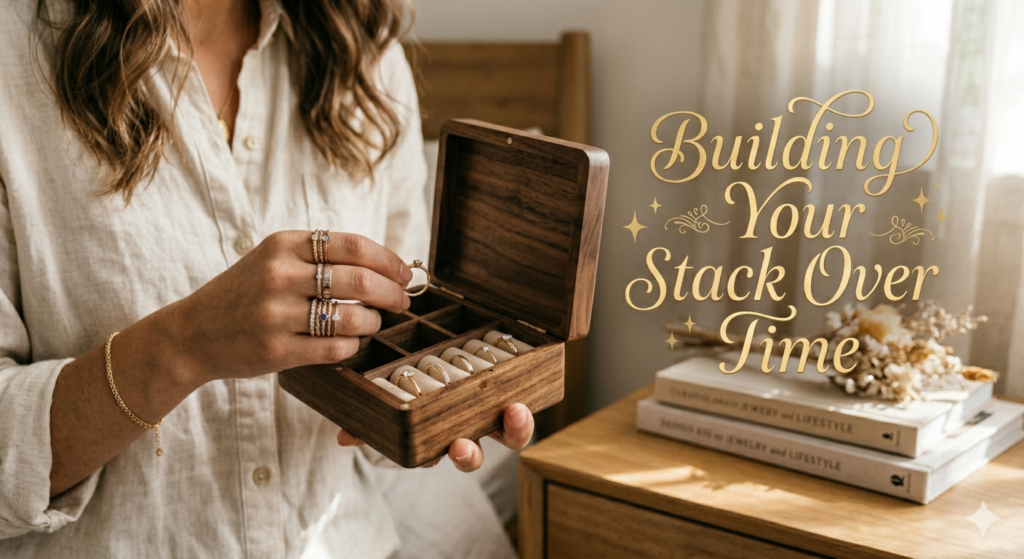
Building Your Stack Over Time
Perhaps the most important piece of advice is also the simplest: let your stack grow slowly. The best stacks are not bought in one afternoon. They are accumulated — a ring here, a ring there, something picked up while traveling, something inherited, something chosen to mark a birthday or a milestone.
Resist the urge to complete your stack in one purchase. There is something genuinely wonderful about a stack that still has room in it, that leaves you the quiet pleasure of anticipating what might come next. When you do add a new ring, let yourself wear it alone for a day before reintroducing the others. Notice how it feels on your finger, notice the weight and the shape, and then slowly bring the others back and see how the new piece changes the conversation.
Your stack should feel like a reflection of where you have been and what you love, not like a display of how many rings you own.
Final Thoughts
Wearing stacking rings is one of those rare fashion choices that manages to be both deeply personal and endlessly adaptable. There is no single right way to do it. There is no formula that guarantees a beautiful result. What there is, instead, is your own eye, your own sense of what feels right on your hand, and a growing instinct for what works and what does not — an instinct you develop simply by wearing, adjusting, experimenting, and paying attention.
Start with one ring you love. Add another when you find something that speaks to it. Learn how to mix metals without being afraid of getting it wrong. Play with proportions and placement. Think about your stack as something that evolves with you, not something that needs to be finished.
And on the days when it all comes together — when the light catches your hand just right and every ring feels like it was always meant to be there — you will understand exactly why people fall in love with stacking rings in the first place.
FAQs
How many rings should a beginner start with?
Start with three. One anchor ring, one simple thin band, and one small accent piece. It looks intentional without feeling overdone.
Can you mix gold and silver in the same stack?
Yes. Let one metal dominate and use the other as an accent. Rose gold bridges the two beautifully and makes the mix feel deliberate.
Which finger works best for stacking rings?
The middle finger is the most forgiving due to its length. But any finger works — it really comes down to your personal style and comfort.
Can I wear stacking rings to work or formal events?
Yes. For formal settings, stick to two or three slim polished bands in one metal. Save the bolder, multi-finger stacks for evenings out.
How do I stop my stacked rings from scratching each other?
Store them separately when not wearing them. Avoid harsh chemicals and chlorine. Clean with a soft cloth and visit a jeweler once a year.

“Hi, I’m Turab Sheikh, the founder of Kids Play Learn. With 2+ years of experience in creating safe and educational toys, I’m passionate about helping children learn, play, and grow in a fun way every day, and I focus on providing toys that inspire creativity, curiosity, and joyful learning.”