Best-Blocks-for-Kids'-Learning
Walk through any busy toy market near Gujrat’s Rail Bazaar or browse any popular online store delivering across Punjab, and you will quickly notice something — the shelves dedicated to children’s toys have never been more crowded. Parents today face a genuinely difficult question when shopping for their little ones: what actually helps a child learn, and what is just clever packaging designed to look educational?
Blocks are one of those rare answers that hold up honestly under scrutiny. They have been used in early childhood education for well over a century, and the research supporting their developmental value continues to grow stronger every decade. Yet many families in Gujrat still think of blocks as simple stacking toys rather than the powerful learning tools they truly are.
This article breaks down the best types of building blocks available for children in Gujrat, explains what each type develops inside a child’s growing mind, and helps you figure out how to pick the right set based on your child’s age, personality, and where they are in their learning journey. Whether you are a parent, a nursery teacher, or a grandparent looking for a meaningful gift — read this before you buy.
Short Answer About Best Blocks for Kids’ Learning Gujrat
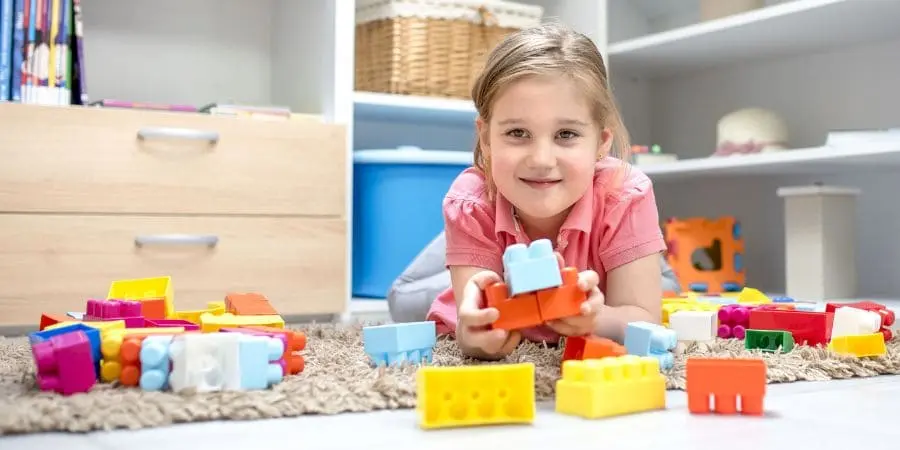
Building blocks are one of the best learning toys for children in Gujrat. They are simple, colorful, and full of learning opportunities. toys for kids, When kids play with blocks, they improve their hand strength, finger control, and hand-eye coordination. These small movements help in writing and daily tasks later in life.
Blocks also encourage creativity. Children can build houses, towers, cars, or anything they imagine. This boosts their thinking skills and problem-solving ability. When a tower falls, they learn patience and try again, which builds confidence.
In Gujrat, many parents prefer safe, high-quality plastic or wooden blocks that are smooth and easy to hold. Educational block sets with numbers, letters, or shapes are especially helpful for early learning. Overall, blocks are not just toys; they are tools that help children grow smarter while enjoying their playtime.
Why Building Blocks Are Among the Most Valuable Learning Tools
Before getting into specific types and recommendations, it is worth understanding exactly what blocks do that most other toys simply cannot. The majority of modern toys are designed around a single, 1 year baby toys, fixed experience — press a button and something lights up, swipe a screen and a reward arrives. The child in those situations is essentially a passenger. With blocks, the child is always the one driving.
Block play is what researchers and educators call open-ended play, meaning there is no single correct outcome and the activity can go in any direction the child decides to take it.
This kind of play is extraordinarily valuable because it requires the child to think, plan, test, fail, adjust, and try again — all without any adult prompting them. Nobody tells the child what to build or how. The motivation comes entirely from within, and that internal drive is the most powerful kind of learning engine there is.
Studies consistently link sustained block play in early childhood with stronger performance in mathematics, better spatial reasoning, improved language development, and greater emotional resilience.
Children who spend meaningful time with blocks during the ages of two through seven tend to show real and measurable advantages in academic skills years down the line.
In Gujrat, where academic competition begins early and parents are deeply invested in their children’s futures, understanding that a well-chosen set of blocks is not a distraction from learning — but one of the most effective forms of early learning available — can genuinely change how a family approaches those first critical years.
Classic Wooden Unit Blocks: The Gold Standard of Early Play
baby toys, Wooden unit blocks have earned their reputation the honest way. Solid, smooth, and satisfying to hold, they offer children something that plastic alternatives rarely manage: a genuinely tactile experience that keeps the senses engaged while the mind works through spatial challenges.
The defining feature of unit blocks is their mathematical precision. Each shape is an exact multiple or fraction of the basic unit rectangle — half-blocks are exactly half the length, double-blocks are exactly double, and so on.
Children playing with these sets absorb the logic of proportions, fractions, and measurement through their hands long before those concepts ever appear on a school worksheet. The learning is invisible to the child but very real.
Wooden blocks also introduce children to basic principles of physics and engineering in the most natural way possible. A child who experiments with balancing a narrow block on a wide one, who tries to build an arch, or who figures out why a broad base allows a taller tower is engaging in genuine scientific thinking.
The feedback is immediate and honest — the structure either stands or it falls. There is no adult needed to explain the result.
In Gujrat, locally crafted wooden block sets made from sheesham or mango wood can be found through artisan sellers in the older markets and through a growing number of specialty toy shops around the city. toys for 2 year old boy, These homegrown options are often considerably more affordable than imported brands and are frequently of excellent quality.
When selecting wooden blocks, look for sets that have been properly sanded with no rough edges, finished with non-toxic varnish or left natural, and include a range of shapes beyond plain rectangles — arches, cylinders, triangles, and curved pieces significantly expand what a child can build and learn.
Magnetic Building Tiles: Where Geometry and Imagination Meet
If wooden blocks are the classic, magnetic building tiles are the modern standout — and there are very clear reasons why families across Gujrat have embraced them so enthusiastically over recent years.
These are flat, brightly coloured plastic tiles with powerful magnets embedded along each edge. They connect instantly when brought together and can be arranged into both flat designs and three-dimensional structures. The magic of a flat arrangement folding into a cube or a pyramid never gets old for a child — and that transformation is doing serious cognitive work every single time. chess board price in pakistan,
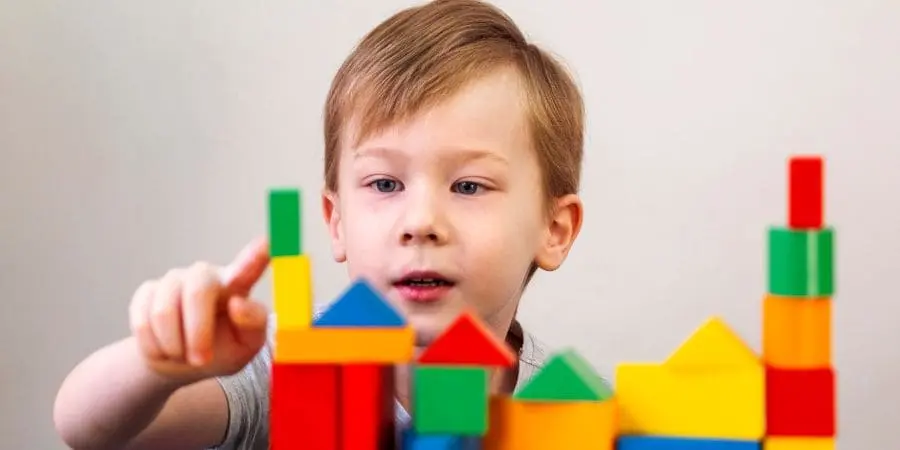
The educational strength of magnetic tiles lies specifically in spatial visualization, which is the mental ability to rotate, fold, and manipulate shapes in your mind before doing it physically. This skill is directly linked to success in mathematics, engineering, architecture, and design.
When a child folds a flat cross of squares into a cube with their hands, they are training their brain to think in three dimensions, and that is a skill many adults genuinely struggle with.
Magnetic tiles also reward collaborative play in a way that other block types do not as naturally. Two or three children building together with magnetic tiles need to communicate, negotiate, and coordinate in real time — which develops social and language skills alongside the spatial ones.
In Gujrat’s toy shops and through major Pakistani online platforms, several brands of magnetic tiles are now readily available at a range of price points. When purchasing, always verify that the magnets are properly sealed inside the tile casing with no way to come loose — loose magnets are a serious swallowing hazard for children under three.
For children aged four and above, magnetic tiles are an outstanding investment that typically remains engaging and age-appropriate for many years.
Interlocking Plastic Bricks: Small Pieces, Enormous Learning
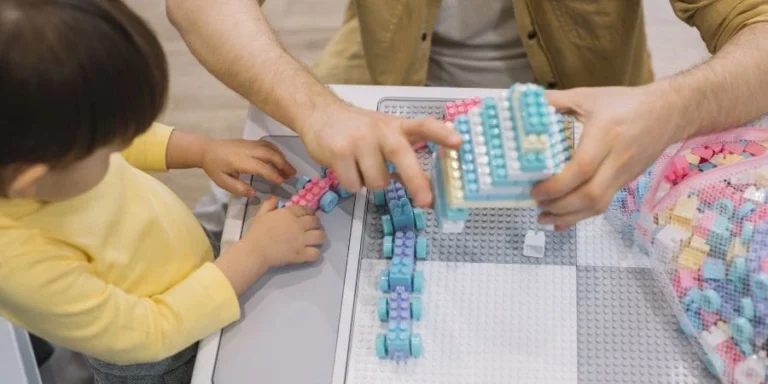
magnetic blocks, Interlocking plastic bricks — the system made globally famous by Danish toy companies but now produced by countless manufacturers at all price levels — have earned their legendary status many times over. The system is beautifully simple: rectangular bricks with studs on top that lock into tubes underneath. From this simplicity, children build entire worlds.
The fine motor development involved in pressing bricks together and pulling them apart is more significant than it looks. These actions build hand strength, pincer grip, and the kind of precise bilateral coordination that children need for writing.
Many occupational therapists recommend brick play specifically for children who are preparing to hold a pencil, because the strength and control required to manipulate bricks transfers directly to handwriting readiness.
Beyond the physical, following a set of construction instructions introduces children to procedural thinking — the understanding that complex results are achieved through a series of precise steps completed in the correct order.
This is the same mental framework behind cooking from a recipe, following a science experiment, or writing a computer programme. Children who practise procedural thinking early are better equipped for structured learning environments.
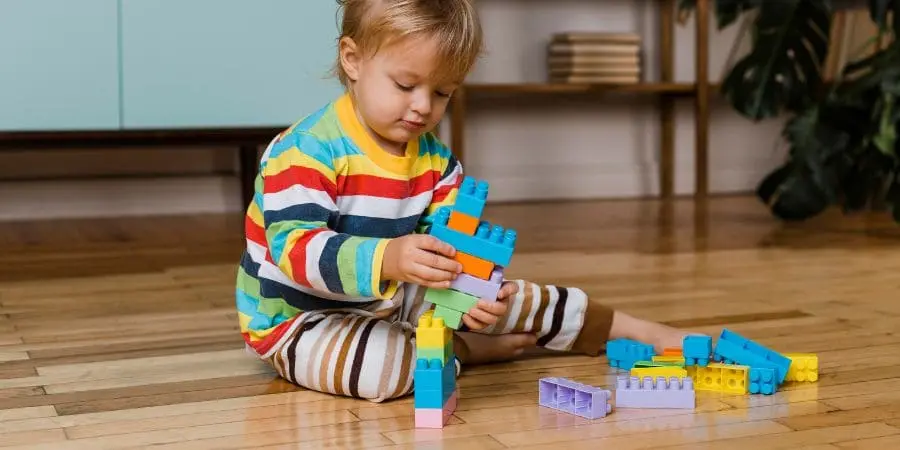
In Gujrat, branded and locally manufactured versions of interlocking bricks are widely available. For toddlers between two and four years, oversized bricks that are easy to grip and safe if mouthed are the right starting point.
Children from five years onward can manage the smaller standard-size bricks and begin to follow illustrated building guides. Offering both free-form building time and occasional guided instruction projects provides the broadest developmental benefit.
Foam and Soft Blocks: The Right Start for the Very Young
wooden toys, Not every learner is school-age, and not every lesson is about geometry. For babies and toddlers between six months and roughly two years, foam and fabric-covered soft blocks are where the block journey properly begins.
These blocks are lightweight enough for tiny fingers to grasp, completely soft so there is no injury risk when they are dropped, thrown, or fallen on, and they often include extra sensory features — crinkle sounds, different fabric textures on each face, small mirrors, or bold high-contrast patterns that attract a baby’s developing vision.
The learning at this stage is primarily sensory and physical, but it is foundational. Babies discover cause and effect — push the block and it moves. They begin to develop object permanence — the block still exists even after it rolls under the sofa.
They practise the grasping, reaching, transferring, and eventually stacking that forms the bedrock of physical coordination. Stacking two blocks successfully at around twelve to fifteen months is a legitimate developmental milestone, and every tower built and knocked down is teaching something real.
Local baby shops across Gujrat stock foam block sets in bright primary colours throughout the year, and they make excellent first-birthday gifts.
When choosing foam blocks for very young children, confirm the materials are certified non-toxic, that there are absolutely no detachable small parts, and that the fabric covers are washable — because everything a baby touches eventually goes into their mouth.
Alphabet and Number Blocks: Building Language One Letter at a Time
Alphabet blocks have been around since the seventeenth century, and their enduring popularity is no accident. Each face of a traditional alphabet block carries a letter, a picture of something beginning with that letter, and often a numeral on another side.
This multi-sensory approach to literacy — holding a letter, seeing it in bold print, and connecting it to a familiar image — helps children form strong associations between shapes and sounds far more effectively than looking at a flat page.
For children growing up in Gujrat, where both Urdu and English are part of everyday life and formal schooling, bilingual alphabet blocks featuring Urdu script on one face and English letters on another carry particular value.
Children in the critical language acquisition window between eighteen months and five years absorb multiple languages remarkably efficiently, and handling a block that carries both the letter Alif and the letter A builds neural connections between both scripts in a deeply natural way.
Bilingual Urdu-English block sets are produced by a small number of Pakistani educational toy manufacturers and can be found through specialty learning toy shops in Gujrat and through several reputable online sellers. They make genuinely meaningful gifts for young children, and the literacy benefit during these early years is real and lasting.
Blocks for the Builder Who Thinks Differently: Balance and Architecture Sets
Some children are not content with a tidy tower. They want to know exactly how high a structure can go before it collapses, whether an arch can hold weight, or how to build something that leans dramatically without falling.
For these children — and they exist in every classroom and every neighbourhood in Gujrat — architecture and balance-focused block sets open an entirely different kind of learning experience.
These sets typically include irregular shapes: half-spheres, wedges, asymmetric curves, cylinders of varying heights, and pieces with notches or grooves designed to interlock in non-obvious ways. The challenge they present forces a child to think actively about centre of gravity, load distribution, and structural integrity. These are the foundational concepts of engineering, presented entirely through play.
Children with an analytical, persistent temperament — often the ones who frustrate parents with endless “why” questions and who refuse to accept “because I said so” as an explanation — frequently thrive with these more complex sets.
Some sets include a booklet of building challenges with increasing levels of difficulty, which adds goal-directed play to the mix and keeps older children engaged for remarkably long stretches of time.
For children aged five and older in Gujrat who have already spent time with standard wooden or plastic blocks, a balance or architecture set is an excellent next step that will stretch their thinking in new directions.
How to Choose the Right Blocks for Your Child in Gujrat
With so many options available across local markets and online platforms, making a decision can feel overwhelming. A few straightforward principles cut through the confusion considerably.
Start with your child’s age and developmental stage, not with whatever looks most impressive on a shelf. A block set that is too advanced frustrates a child and gets abandoned. One that is too simple bores them within a week.
The right match keeps a child returning to play again and again over months and years, and that sustained engagement is where the real learning accumulates.
Consider your child’s temperament alongside their age. A child who loves precision and detail will likely be drawn to interlocking bricks and building from instructions.
A child who loves big, sweeping creative gestures will probably prefer large wooden unit blocks or magnetic tile sets with many pieces. There is no universally best block — the best block is the one your specific child genuinely plays with.
Think carefully about quality and durability. In Gujrat’s climate, humidity and summer heat can warp or damage cheap composite materials surprisingly quickly. Solid wood and quality hard plastic hold up far better over time.
Check packaging for safety markings and age guidance, and be cautious of very cheap sets from completely unknown manufacturers that carry no quality certifications at all.
Finally, do not underestimate the importance of quantity. A set of twenty blocks is usually too limiting to build anything truly satisfying, which leads to frustration rather than engagement.
A generous set of sixty to one hundred pieces opens up real creative freedom. Within the same block system, more pieces is almost always better than fewer pieces of a slightly premium brand.
The Role Parents and Teachers Play in Making Block Play Work
Blocks do not teach children entirely on their own. An adult who sits on the floor alongside a child and asks genuine, open-ended questions — what do you think will happen if you put this piece on top? how could you make that wall stronger?
what would you build if you had twice as many pieces? — transforms good play into great learning. The role of the adult is not to direct the building but to stretch the thinking.
In many Gujrat households, academic pressure begins early and unstructured play is sometimes quietly viewed as time that could be better spent on schoolwork.
It is worth knowing clearly that the cognitive processes exercised during forty minutes of thoughtful block play are directly connected to the skills children need for mathematics, science, and language arts. Play is not the opposite of learning. At the early childhood stage, play is precisely how deep learning happens.
Nursery and kindergarten teachers in Gujrat can incorporate structured block play into the weekly routine with real educational benefit.
Even one dedicated session per week, followed by a brief discussion — what did you build, how did you build it, what did not work the first time — supports mathematical vocabulary, verbal reasoning, and collaborative skills in ways that no worksheet can replicate.
Final Thoughts
There is something quietly impressive about a well-made set of blocks. They do not flash, beep, offer digital rewards, or demand attention. They simply sit there and wait for a child to pick them up and begin imagining. In that patient waiting, there is enormous potential.
For families and educators in Gujrat, investing in a good set of blocks — whether classic wooden ones from a local artisan, magnetic tiles from a toy shop, or bilingual Urdu-English alphabet blocks from a Pakistani educational brand — is one of the most grounded choices you can make for a child’s development.
The return on that investment does not show up immediately in test scores or report cards. It shows up over time, in curiosity, in problem-solving confidence, in spatial thinking, in the quiet satisfaction of building something real with your own two hands and watching it stand.
Start simple. Start early. Then step back, and watch what your child builds.
FAQs
What age should block play start?
Soft foam blocks suit babies from 6 months. Wooden and plastic blocks work from age 2. Match complexity to the child’s current stage.
Are local Gujrat market blocks safe?
Many are excellent. Check for smooth edges, non-toxic materials, no loose small parts, and avoid sets with no safety markings.
Do blocks actually help school performance?
Yes. Block play builds spatial reasoning, early maths skills, language, and focus — all directly linked to stronger academic outcomes.
Which blocks suit bilingual kids in Gujrat?
Urdu-English bilingual alphabet blocks are ideal. They build literacy in both scripts naturally during the early language window.
How many blocks does a child really need?
Aim for at least 60 pieces. More pieces in the same system means more creative freedom and longer, richer play sessions.

“Hi, I’m Turab Sheikh, the founder of Kids Play Learn. With 2+ years of experience in creating safe and educational toys, I’m passionate about helping children learn, play, and grow in a fun way every day, and I focus on providing toys that inspire creativity, curiosity, and joyful learning.”