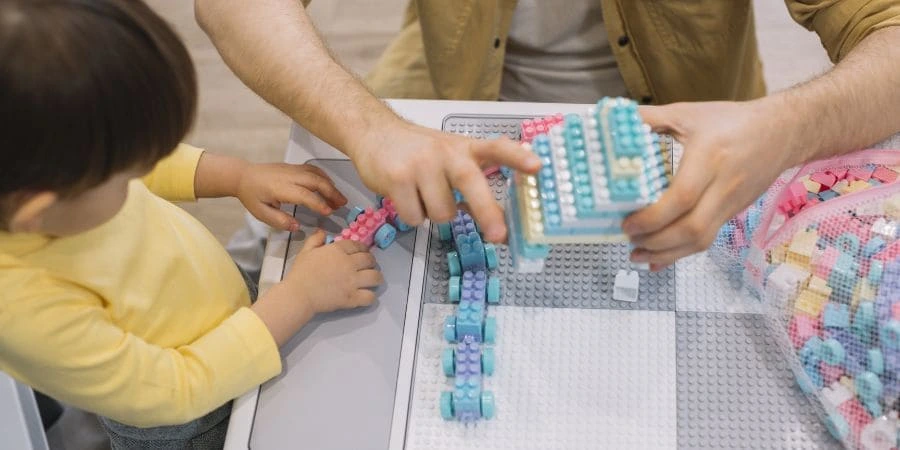
learning-fun-with-magnetic-tiles-bahawalpur
Learning Fun with Magnetic Tiles Bahawalpur, There is something almost magical about watching a child figure something out on their own. That moment when their eyes light up, when the pieces — sometimes quite literally — click together, is one of the most rewarding things a parent or teacher can witness. In Bahawalpur, where education is increasingly being shaped by both traditional values and modern methods, parents are constantly looking for tools that make learning feel less like a chore and more like an adventure. Magnetic tiles have quietly become one of the most powerful tools for exactly that purpose.
If you haven’t introduced magnetic tiles into your child’s learning routine yet, this article is going to change how you think about playtime, classroom activities, and early childhood education altogether.
Write a Short Answer About: What Are Magnetic Tiles and Why Do They Matter
Magnetic tiles are colorful, flat building pieces with small magnets safely sealed inside their edges. Children can easily connect them to create houses, towers, animals, roads, and many other shapes. The magnets help the tiles stick together from different sides, which makes building simple and exciting, even for younger kids.
Learning Fun with Magnetic Tiles Bahawalpur, These tiles matter because they turn playtime into learning time without children even realizing it. While building, kids learn about balance, shapes, patterns, and basic problem-solving. They also improve hand control and coordination as they connect and adjust the pieces. Magnetic tiles encourage creativity because there is no single “right” way to build something. Every child can design in their own unique style.
Another important benefit is that magnetic tiles support early math and science skills. Children naturally explore ideas like symmetry, geometry, and cause and effect while playing. At the same time, they build patience and confidence as they see their ideas come to life.
In short, magnetic tiles are more than just toys. They inspire imagination, strengthen thinking skills, and make learning feel fun and natural for growing minds.
Also Read: toys for kids

What Are Magnetic Tiles and Why Do They Matter
Before diving into how to use them, it helps to understand what magnetic tiles actually are. These are flat, colorful geometric shapes — squares, triangles, rectangles, and more — that have magnets embedded along their edges. When you place two tiles near each other, the magnets snap together, allowing children to build two-dimensional patterns and three-dimensional structures with ease.
What makes them special isn’t just the novelty of the magnets. It’s the fact that they work at the intersection of play and learning. A child building a castle with magnetic tiles isn’t just playing — they are developing spatial reasoning, experimenting with geometry, practicing problem-solving, and building persistence when their structure collapses and they have to start again. All of this happens naturally, without the child even realizing they’re learning.
In Bahawalpur, where classrooms can sometimes be crowded and resources stretched thin, magnetic tiles offer an affordable and highly effective supplement to traditional teaching. They require no electricity, no internet connection, and no complicated instructions. A child aged two can enjoy them as much as a child aged twelve, just at different levels of complexity.
The Educational Benefits That Magnetic Tiles Bring to the Table
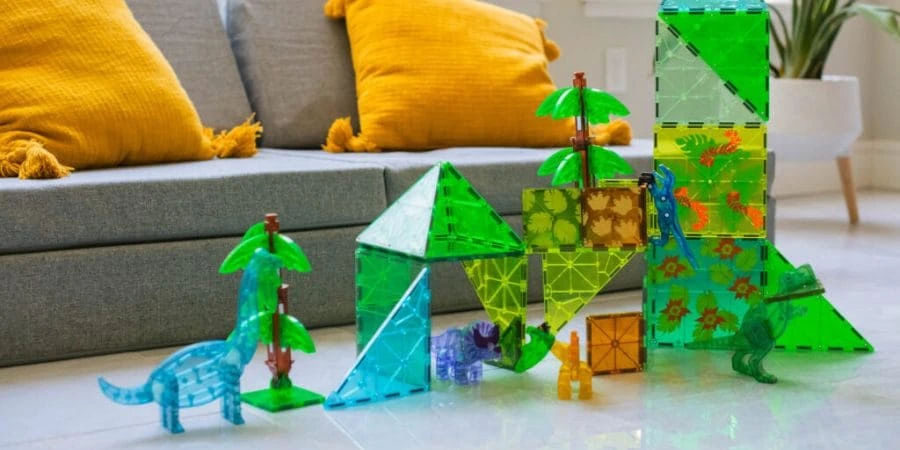
Let’s talk about what these tiles actually teach, because the list is longer than most parents expect.
Early Math and Geometry: When a child handles magnetic tiles, they are constantly engaging with shapes. 1 year baby toys, They learn the names of geometric figures not from a textbook but from touching them, turning them, and building with them. Learning Fun with Magnetic Tiles Bahawalpur, They discover that two triangles can form a square, that rectangles can be combined in different ways, and that three-dimensional structures follow certain rules. This is foundational geometry — and children absorb it without pressure.
STEM Skills from the Ground Up: STEM education — science, technology, engineering, and mathematics — has become a priority worldwide, and Bahawalpur is no exception. Parents who want to give their children a head start in these fields don’t need to enroll them in expensive programs. Magnetic tiles introduce engineering thinking naturally. When a child tries to build a tall tower and it keeps falling over, they start thinking about balance and stability. When they try to create a house with a roof, they learn about structural support. These are engineering concepts taught through play.
Fine Motor Development: The act of picking up tiles, aligning their magnetic edges, and connecting them requires precision and coordination. For younger children especially, this kind of activity strengthens the small muscles in their fingers and hands — muscles they will need for writing, drawing, and countless other tasks.
Creativity and Imagination: Not every benefit of magnetic tiles is academic. They are deeply creative tools. A child in Bahawalpur can build a mosque, a fort from the old city walls, a rocket ship, or something entirely imaginary. The open-ended nature of magnetic tiles means there is no wrong answer and no ceiling on what can be created. This feeds imagination in a way that screen-based entertainment simply cannot.
Social and Communication Skills: When children build together, they negotiate. They share tiles, argue about what to build next, take turns, and eventually arrive at something they created as a team. These social dynamics are incredibly valuable and often overlooked when we think about learning toys.
How to Introduce Magnetic Tiles in a Bahawalpur Home Setting
baby toys, Many families in Bahawalpur wonder where to start. The good news is that magnetic tiles don’t require a manual or a lesson plan. The key is to create the right environment and then step back.
Start by giving your child a set of tiles and doing nothing. Just watch. Most children will immediately begin exploring — stacking, connecting, building. In this first phase, your job is to observe what your child is naturally drawn to. Do they make flat patterns? Do they try to go vertical? Do they sort by color? This tells you a lot about how their mind works.
After a few sessions of free play, you can start introducing gentle challenges. Ask your child if they can build something taller than a water bottle. Ask them if they can make a shape that has no straight edges. Ask them what would happen if they tried to make a box with a lid. These open-ended questions guide learning without dictating it.
Also Read: toys for 2 year old boy
One approach that works especially well in home settings is theme-based building. Children in Bahawalpur grow up surrounded by rich cultural and architectural heritage. Encourage your child to recreate something from their surroundings — the domes of a nearby mosque, the archways of a market, or the geometric patterns seen in local art and tilework. This connects the activity to their world and makes it personally meaningful.
Using Magnetic Tiles in Classroom Settings Across Bahawalpur
Teachers in Bahawalpur face real challenges: large class sizes, limited materials, and students with varying levels of prior education. Magnetic tiles can help address some of these challenges, particularly in early childhood and primary education.
Station-Based Learning: One powerful classroom strategy is to set up magnetic tiles as one of several learning stations. While one group of students works on reading, another group can be at the tile station building structures based on a given theme or concept. This keeps all students engaged and allows the teacher to circulate and provide individual support.
Connecting Tiles to Curriculum: A particularly effective approach is to tie magnetic tile activities directly to what students are currently studying. If the class is learning about shapes, students build every 2D shape they know and then transform them into 3D structures. If the class is learning about patterns, students create repeating color sequences with their tiles. This kind of integration helps students see connections between abstract concepts and concrete reality.
Assessment Through Observation: One challenge teachers face is assessing learning without putting unnecessary pressure on students. Magnetic tile building sessions offer a natural opportunity for observational assessment. A teacher can watch how students approach a problem, whether they experiment or follow a rigid plan, whether they give up easily or persist, and whether they collaborate effectively. This is valuable information that a written test cannot provide.
Group Projects: Assigning group projects that use magnetic tiles encourages teamwork and communication. magnetic blocks, For example, asking groups of three or four students to build a representation of Bahawalpur’s Noor Mahal using magnetic tiles would require discussion, planning, division of labor, and creative thinking — all of which are valuable skills far beyond the classroom.
Practical Tips for Parents Buying Magnetic Tiles in Bahawalpur
If you’re ready to invest in magnetic tiles for your child, here are some practical things to keep in mind.
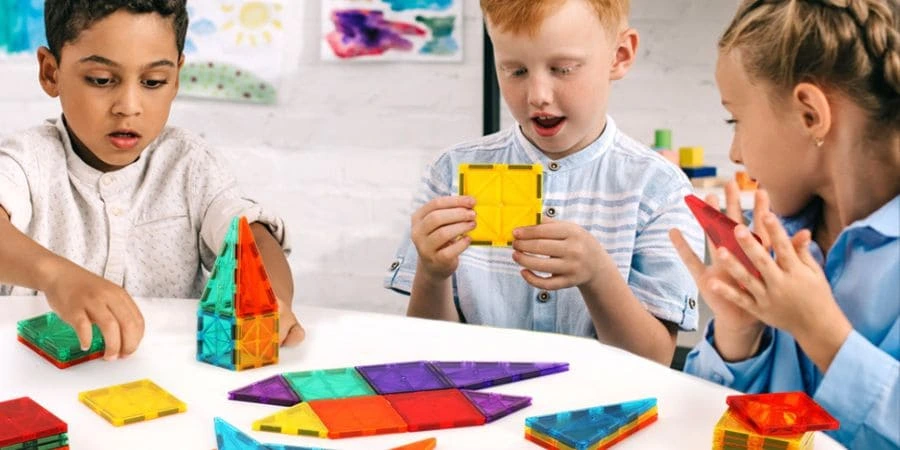
Look for sets that include a good variety of shapes, not just squares and triangles. Sets that include pentagons, hexagons, and other polygons open up more complex building possibilities and keep older children challenged. It’s also worth checking the quality of the magnets — stronger magnets make building more satisfying and stable, while weak magnets can frustrate young children.
Consider the age of your child. For toddlers and very young children, larger tiles are safer and easier to handle. For school-age children, standard-sized tiles are fine and offer more building flexibility. If you have children of different ages, a medium-sized set usually works for all of them.
In Bahawalpur, you can find magnetic tiles in a growing number of toy shops, particularly in the main commercial areas. They are also available from online retailers who deliver across Pakistan. Prices vary depending on the brand and size of the set, but even a modest starter set can provide hours of meaningful learning and play.
Storage matters more than most people think. Keep tiles in a flat container or tray so they don’t get tangled up or lost. When tiles are easy to access and put away, children are more likely to use them regularly. A regular habit of play is far more valuable than occasional extended sessions.
Making Magnetic Tile Activities Part of Daily Routines
One of the biggest mistakes parents make with educational toys is treating them as special occasion items. Magnetic tiles work best when they become part of everyday life. Even fifteen minutes of magnetic tile play each day compounds into significant learning over weeks and months.
Consider building tile time into your daily schedule — perhaps after school as a way to decompress, or during a quiet hour in the afternoon. In Bahawalpur’s warm climate, you might even take the tiles outside to the courtyard or garden and let children build in a different environment. The change of setting often sparks new creativity.
Joining your child during tile play — not to direct but to participate — also makes a real difference. When children see their parents or older siblings engaging enthusiastically with the same activity, their own interest deepens. Try building alongside your child without taking over. Make mistakes, rebuild, ask your child for advice. This models the kind of learning mindset — curious, persistent, unafraid of failure — that will serve them well throughout their education.
Magnetic Tiles and Pakistan’s Broader Educational Goals
Pakistan’s education system is undergoing significant reform, with increasing emphasis on activity-based learning, critical thinking, and STEM education. In Sindh, KPK, and Punjab — where Bahawalpur sits — curriculum updates have been pushing toward more hands-on approaches. Magnetic tiles align beautifully with these goals.
They don’t just prepare children for standardized tests. They prepare children for a world that increasingly rewards creativity, adaptability, and the ability to solve problems that don’t have a single right answer. In a city like Bahawalpur that is growing rapidly and connecting more deeply to national and global economies, equipping children with these kinds of foundational skills is an investment with enormous returns.
Parents who introduce magnetic tiles today are not just buying a toy. They are giving their children a tool for thinking — one that will quietly shape how they approach problems, how they collaborate with others, and how they see the world around them.
Common Questions Parents Ask About Magnetic Tiles
Are magnetic tiles safe for young children? High-quality magnetic tiles are designed to be safe, with magnets fully encased in durable plastic. However, always supervise very young children during play, and ensure that no tiles are broken or cracked, which could expose internal components.
My child just builds the same thing over and over. Is that okay? Absolutely. Repetition is a powerful part of how children learn. When a child builds the same structure repeatedly, they are refining their technique, building confidence, and often making small changes each time. Trust the process.
How do I keep my child interested over time? Introduce new challenges gradually. Add new shapes to the set. Build alongside your child. Connect tile activities to things your child is passionate about, whether that’s animals, vehicles, buildings, or anything else. The goal is to keep the activity feeling fresh and open-ended.
Can magnetic tiles replace screen time? They can certainly reduce it. When magnetic tiles are available and accessible, many children will naturally choose them over screens. They offer a richness of physical, creative, and cognitive engagement that passive screen use simply cannot match.
Final Thoughts
In a world that often overcomplicates early education, magnetic tiles stand out for their beautiful simplicity. They ask nothing of a child except curiosity — and children, given the space and the tools, are endlessly curious. In Bahawalpur, where families hold education in the highest regard and where the next generation is growing up at an exciting and demanding crossroads of tradition and modernity, tools like magnetic tiles feel especially timely.
They make learning feel like the most natural thing in the world, because when a child is truly engaged, it is. Every tower built and rebuilt, every pattern discovered, every structure that somehow holds itself together against gravity — these are moments of genuine learning. And they happen not in spite of the fun, but because of it.
If there is one thing worth taking away from this article, it is this: the most effective learning rarely looks like studying. It looks like play. And magnetic tiles, perhaps more than any other tool available to families in Bahawalpur right now, understand that truth deeply.
Give your child a set of magnetic tiles. Give them time and space. Then watch what they build — and who they become in the process.
FAQs
What age is best to start using magnetic tiles?
Most kids from age 2 onwards enjoy them. Younger ones build simple shapes while older children tackle complex 3D structures confidently.
Where can I buy magnetic tiles in Bahawalpur?
Check local toy shops in main bazaars or order online through Pakistani retailers. Quality sets are available at reasonable prices with home delivery.
How many tiles does my child actually need to start?
Honestly, even a small 32-piece starter set is enough. Kids do amazing things with fewer pieces than you’d expect. Expand the set gradually.
Can magnetic tiles help kids who struggle in school?
Yes, absolutely. Hands-on building builds confidence quietly. Children who freeze during tests often shine when learning through touch and creativity instead.
How do I stop my child from losing the tiles?
Keep a dedicated flat tray or box just for tiles. Make tidying up part of the routine. Kids respect their toys more when storage feels easy and organised.

“Hi, I’m Turab Sheikh, the founder of Kids Play Learn. With 2+ years of experience in creating safe and educational toys, I’m passionate about helping children learn, play, and grow in a fun way every day, and I focus on providing toys that inspire creativity, curiosity, and joyful learning.”