perfect-wooden-puzzle-for-kids
Perfect Wooden Puzzle for Kids Layyah, Watching a child sit quietly, turn a piece over in their hands, and then slide it perfectly into place — there is something deeply satisfying about that moment. Wooden puzzles have been part of childhood for generations, and for good reason. They are simple, durable, and surprisingly powerful when it comes to a child’s development. But walking into a toy store or scrolling through an online shop these days can feel overwhelming. There are hundreds of options, different sizes, different themes, different price points. How do you actually pick the right one?
This guide is written for parents, grandparents, aunts, uncles, and anyone in Layyah who wants to find a wooden puzzle that a child will genuinely love and benefit from. We are going to walk through everything — age-appropriateness, piece count, wood quality, theme selection, safety, and where to find good options locally or online. By the end, you will know exactly what to look for and what to avoid.
Write a Short Answer about: Why Wooden Puzzles Still Matter in a Digital Age
toys for kids, Perfect Wooden Puzzle for Kids Layyah, In a world filled with tablets, mobile games, and fast-moving screens, wooden puzzles still hold a special place in a child’s life. They offer something digital devices cannot — real, hands-on learning. When a child picks up a wooden puzzle piece, they feel its weight, shape, and texture. This simple physical interaction strengthens fine motor skills and improves hand-eye coordination in a natural way.
Wooden puzzles also encourage patience and problem-solving. There are no flashing hints or instant rewards. A child has to think, try, make mistakes, and try again. This process builds focus and confidence. Completing a puzzle gives a deep sense of achievement that comes from effort, not automation.
Another important benefit is reduced screen time. Too much exposure to screens can affect attention span and sleep patterns. Wooden puzzles provide a calm and healthy alternative. They create opportunities for family bonding, as parents and children can sit together, talk, and solve puzzles as a team.
Most importantly, wooden puzzles spark imagination. Without sound effects or animations, children use their creativity to bring the pieces to life. In a digital age, simple wooden puzzles remind us that meaningful learning does not always need a battery or a screen.
Why Wooden Puzzles Still Matter in a Digital Age
Before we get into the how, it is worth spending a moment on the why. 1 year baby toys, We live in a world where children have access to tablets, smartphones, and games that flash and beep and reward every tap. So why bother with a wooden puzzle at all?
The answer lies in what puzzles do that screens simply cannot replicate. When a child works on a wooden puzzle, they are using their hands. They are picking up pieces, turning them, trying them in different spots, and feeling the resistance when something does not fit. This kind of hands-on problem solving builds fine motor skills in a way that swiping on a glass screen never will.
Beyond the physical, puzzles also teach patience. There is no shortcut. You cannot rush through a puzzle by tapping faster. You have to think, try, fail, and try again. For young children, this is one of the earliest experiences of what it feels like to work toward a goal. That lesson sticks.
Cognitive development is another major factor. Spatial reasoning — the ability to understand how shapes relate to each other in space — is a skill that shows up later in math, science, engineering, and even art. Puzzles are one of the most direct ways to build this skill in early childhood.
And then there is the emotional side. Completing a puzzle gives a child a genuine sense of accomplishment. Not a digital badge or a sound effect, but the actual visual proof that they did something. That feeling builds confidence.
For families in Layyah who are looking for meaningful, screen-free activities, wooden puzzles offer all of this and more. They are the kind of toy that earns its place in the home.
Start With Age: It Is the Most Important Factor
baby toys, The single most important thing to consider when choosing a wooden puzzle is the age of the child. A puzzle that is too easy will bore a child within minutes. A puzzle that is too hard will frustrate them and put them off puzzles entirely. Getting this right makes all the difference.
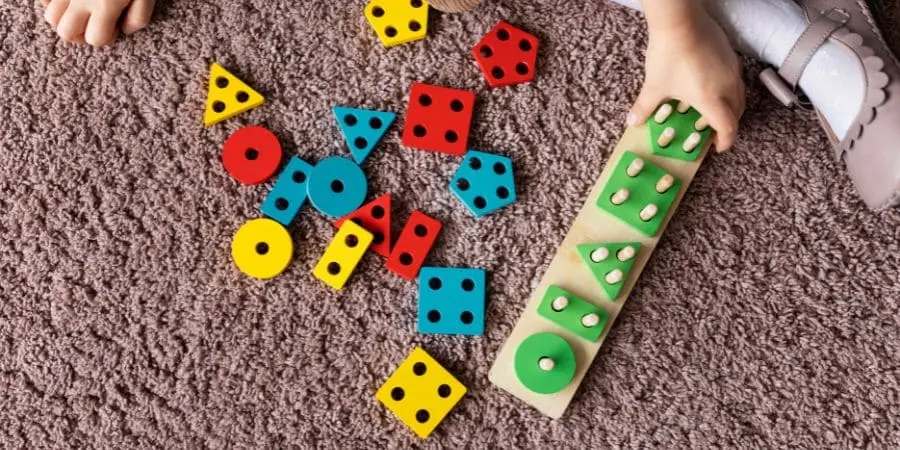
Ages 1 to 2: At this stage, children are just beginning to understand that objects have shapes and that those shapes can fit into matching spaces. The best puzzles for this age are chunky shape sorters and simple three to five piece puzzles with large, easy-to-grip knobs on each piece. The pieces should be big enough that there is zero choking hazard, and the images should be bold and simple — a single animal, a sun, a house. These are not really puzzles in the traditional sense, but they are the foundation.
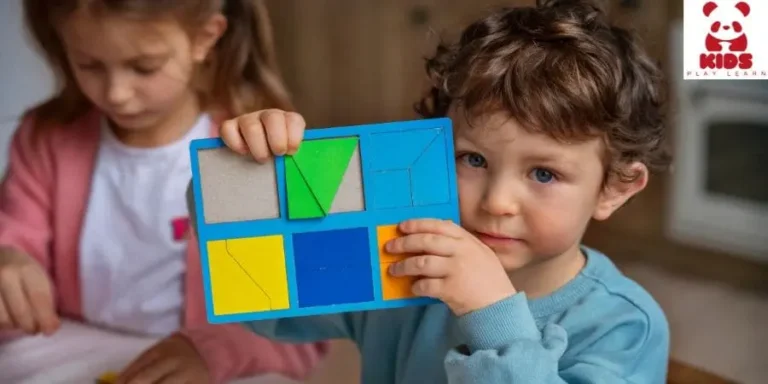
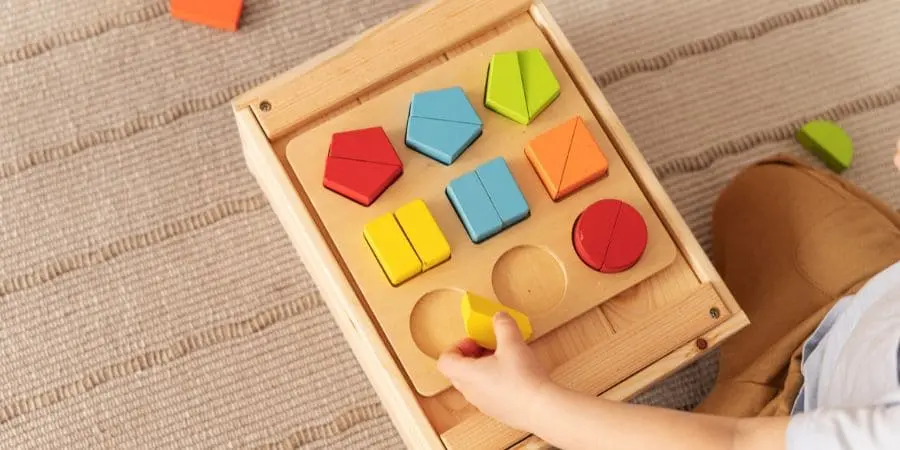
Ages 2 to 3: Children at this age are developing more coordination and can handle puzzles with six to ten pieces. Wooden tray puzzles work beautifully here because each piece fits into a specific cutout, which gives the child clear visual guidance. Farm animals, vehicles, and colorful food themes are always popular. Knob handles are still helpful but not essential.
Ages 3 to 4: This is when things get more interesting. Children can handle twelve to twenty-five piece puzzles and are starting to enjoy a mild challenge. They can begin to recognize that pieces connect to each other rather than fitting into individual cutouts. Jigsaw-style wooden puzzles with interlocking pieces become appropriate here.
Ages 4 to 6: Children in this range are capable of handling twenty-five to fifty piece puzzles, especially when the image is familiar and engaging. They can work more independently and will often revisit a puzzle multiple times to try to complete it faster than before.
Ages 6 and up: Larger puzzles with seventy to one hundred pieces and beyond become appropriate. At this stage, you can also introduce wooden puzzles with more complex themes — maps, detailed scenes, abstract designs.
One practical tip: always buy slightly below the upper end of a child’s range, not at the top. A puzzle that a child can complete with a bit of effort is far more motivating than one that leaves them stuck.
Also Read: toys for 2 year old boy
Piece Count and Puzzle Format
Related to age is the question of how many pieces a puzzle should have and what format works best. These two things are connected, but not identical.
Wooden puzzles generally come in a few different formats. Tray or frame puzzles have a wooden base with cut-out shapes, and each piece drops into its own designated space. These are ideal for toddlers and early preschoolers. Interlocking jigsaw puzzles look more like what adults think of when they hear the word puzzle — pieces that connect to each other to form a larger image. These are better suited for children aged three and above.
magnetic blocks, There are also layered wooden puzzles where different levels of detail are stacked on top of each other. For example, a puzzle of the human body might have a base layer of the skeleton, a middle layer of organs, and a top layer of skin. These are wonderful for older children who enjoy learning while they play.
Chunky three-dimensional wooden puzzles — the kind where you assemble animals or vehicles from thick wooden pieces — add another dimension of engagement. These are great for children aged four and above who have solid fine motor skills.
When in doubt about piece count, it is always better to start smaller. A child who completes a fifteen-piece puzzle and wants more is in a much better position than a child who gives up halfway through a fifty-piece one.
Wood Quality: What to Look For and What to Avoid
Not all wooden puzzles are made equal, and this matters more than most people realize. A cheaply made wooden puzzle can splinter, have rough edges, or fall apart after a few uses. A well-made one will last for years and can even be passed down to younger siblings.
When evaluating wood quality, look for puzzles made from solid hardwood or high-quality plywood. Hardwood pieces are heavier and more durable, while good plywood offers a smooth surface that holds paint and finishes well. Avoid puzzles made from MDF (medium-density fiberboard) as it is prone to swelling when wet and can break apart at the edges.
The finish of the pieces matters too. Look for puzzles that use non-toxic, water-based paints or natural dyes. Children are going to put these pieces in their mouths, no matter how old they are. Safe finishes are not optional — they are essential.
Run your fingers along the edges of the pieces. A quality wooden puzzle should be smooth with no sharp edges or splinters. Pieces should fit together snugly without requiring excessive force, but should not be so loose that they fall apart on their own.
The thickness of the pieces is another indicator of quality. Thicker pieces are easier for small hands to grip and are far more durable. For toddler puzzles, pieces should be at least half an inch thick. For older children, slightly thinner pieces are acceptable.
Knob handles, which are the small wooden pegs attached to puzzle pieces for easy gripping, should be firmly attached. Test them by giving the knob a firm tug. If it wobbles or comes off easily, the puzzle is not well made.
Choosing the Right Theme
A puzzle that matches a child’s interests is a puzzle that will actually get used. The theme matters enormously for engagement, especially for children aged three and above who are starting to develop specific interests.
For younger children, familiar images work best — animals, family members, food, vehicles, and simple nature scenes. These are things they already know and recognize, which gives them context for understanding what the completed puzzle should look like.
For older children, the options open up considerably. Children who love animals might enjoy wildlife puzzles or maps of animal habitats. Children who are interested in space might love a puzzle of the solar system. Children who enjoy stories might respond to puzzles based on characters from their favorite books.
Cultural relevance is also worth considering, especially in Layyah and across Pakistan. Puzzles that reflect local landscapes, traditional festivals, Pakistani wildlife, or familiar architectural styles can feel more personal and meaningful to children. These are harder to find in mass-market stores but are available through specialty toy sellers and handcrafted options.
Educational themes are worth highlighting here too. Alphabet puzzles, number puzzles, shape and color puzzles, and map puzzles all combine the benefits of puzzle-solving with direct learning content. A child who completes an alphabet puzzle repeatedly is reinforcing letter recognition without even realizing they are learning.
The key is to involve the child in the selection if possible. If a four-year-old is with you when you shop, let them point to the theme that excites them. That simple act of choice increases their investment in the toy before you have even opened the box.
Safety Standards: Non-Negotiable Considerations
Safety is not something to compromise on when buying any toy for a child, and wooden puzzles are no different. There are a few specific things to check before purchasing.
First and most importantly, check for small parts. Any puzzle piece small enough to fit inside a toilet paper roll is a choking hazard for children under three. For young toddlers, every single piece should be large enough that this is not a concern. Many quality manufacturers test their products against this standard and will note it on the packaging.
Check for lead-free paints. Some imported wooden toys use paints that contain lead or other heavy metals. Look for products that are tested and certified to safety standards such as EN71, ASTM F963, or similar international toy safety certifications. Reputable sellers will provide this information.
Sharp edges and splinters are another safety concern. As mentioned earlier, run your hands over the pieces before giving them to a child. If you feel anything rough or sharp, do not give the puzzle to a young child until it has been sanded smooth.
Avoid puzzles with small magnetic pieces unless they are specifically designed for older children. Small magnets are one of the most dangerous toys on the market if swallowed and have caused serious injuries in young children.
Finally, consider the structural stability of the puzzle tray or board. It should lie flat on a surface without wobbling, and should not have any weak points where it might crack or break with normal use.
Where to Find Good Wooden Puzzles in and Around Layyah
Finding quality wooden puzzles in Layyah requires knowing where to look. Local toy shops in the city center sometimes carry basic wooden puzzles, particularly tray-style ones for toddlers. The selection may be limited, but the advantage is that you can inspect the product before purchasing.
For a wider selection, consider visiting larger markets in nearby cities like Multan or Faisalabad, where toy shops tend to carry a broader range of imported and locally made wooden puzzles. Educational toy stores in urban centers are often the best source for high-quality options.
Online shopping has made things significantly more accessible for families in smaller cities. Platforms like Daraz carry a wide range of wooden puzzles, and it is worth reading reviews carefully and checking seller ratings before purchasing. Look for sellers who specify non-toxic materials and provide age recommendations.
Handcrafted wooden puzzles are another option worth exploring. Local craftspeople and woodworkers can sometimes create custom puzzles, and these tend to be made with care and quality materials. If you know someone who works with wood, it is worth asking if they can make a simple shape or tray puzzle for a young child.
Practical Tips for Getting the Most Out of a Wooden Puzzle
Choosing the right puzzle is only half the story. How you introduce it and engage with your child around it matters just as much.
Sit with your child the first time they try a new puzzle. Do not do it for them, but be present. Ask questions — “What color is that piece? Where do you think it might go?” This kind of guided exploration teaches children how to approach a puzzle strategically rather than just randomly trying pieces.
Keep puzzles accessible. If a puzzle is stored in a box on a high shelf, it will rarely get used. Store puzzles in a low basket or on an open shelf where children can choose them independently during play time.
Rotate puzzles rather than keeping all of them out at once. A puzzle that has been out of sight for a few weeks feels new again when it reappears. This keeps children engaged and gives each puzzle a longer useful life.
When a child is struggling, resist the urge to step in immediately. Productive struggle is a real thing. A few minutes of frustration followed by a breakthrough is far more valuable than an easy solve with your help. That said, know when to offer a gentle nudge rather than letting frustration tip into tears.
Final Thoughts
Choosing the perfect wooden puzzle for a child in Layyah does not have to be complicated, but it does require some thought. Start with age-appropriateness, think about piece count and format, pay close attention to wood quality and safety, and choose a theme that genuinely excites the child. These four things alone will point you toward a great choice most of the time.
Wooden puzzles are one of the most enduring and genuinely beneficial toys a child can have. They teach patience, build problem-solving skills, develop fine motor coordination, and deliver a sense of real accomplishment. In a world that moves fast and rewards instant gratification, a puzzle quietly insists that some things are worth working for.
The right puzzle, given at the right time, can become one of those childhood objects that a child returns to again and again. It might even become something they one day share with their own children. That is the kind of value that is hard to put a price on, and it starts with the simple decision to choose thoughtfully.
Take your time, ask the right questions, and trust your instincts. You know the child in your life better than any product description ever will. Use that knowledge, apply what you have learned here, and you will find something wonderful.
FAQs
What age is best for wooden puzzles?
Start at age 1 with simple knob puzzles and increase complexity as the child grows.
How many pieces should a toddler’s puzzle have?
Ages 2–3 do best with 6–10 pieces. Too many pieces cause frustration.
Are wooden puzzles safe for babies?
Yes, if pieces are large, splinter-free, and painted with non-toxic, lead-free paint.
What wood quality should I look for?
Choose solid hardwood or quality plywood. Avoid MDF — it splinters and swells easily.
Where can I buy wooden puzzles in Layyah?
Check local toy shops, Multan/Faisalabad markets, or shop online via Daraz.

“Hi, I’m Turab Sheikh, the founder of Kids Play Learn. With 2+ years of experience in creating safe and educational toys, I’m passionate about helping children learn, play, and grow in a fun way every day, and I focus on providing toys that inspire creativity, curiosity, and joyful learning.”